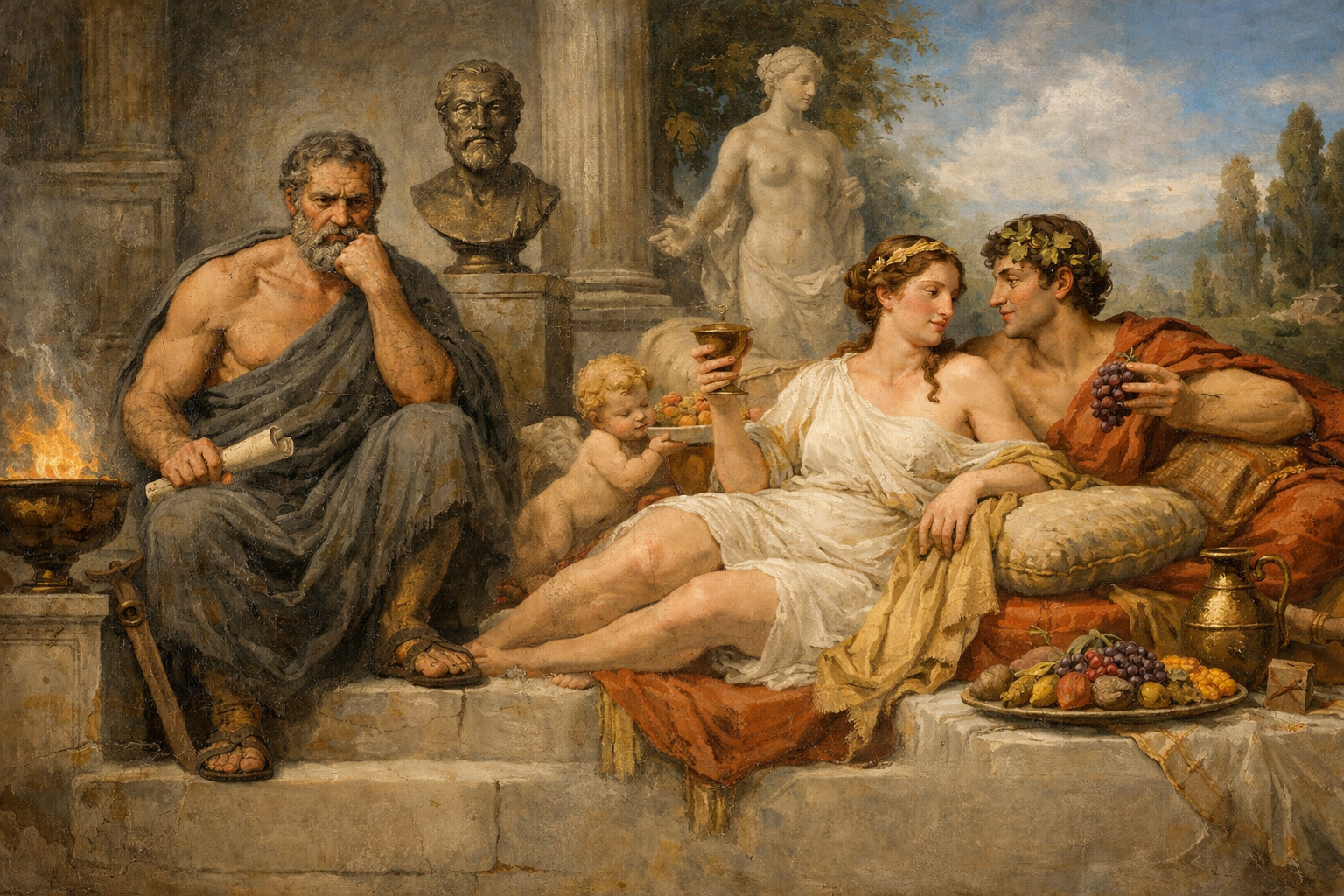
The Inner Citadel and the Garden
Stoicism is fashionable again.
Its language appears in business books, podcasts, athletic training, military culture, leadership seminars, and the daily routines of people trying to remain composed in an unstable world. Marcus Aurelius has become an unlikely modern celebrity. Epictetus is quoted by executives and coaches. The Stoic distinction between what is within our control and what is not has become a common currency.
There are superficial reasons for this revival. Stoicism is practical. Its lessons can be compressed into memorable rules. It promises resilience, self-command, and independence from the judgments of others. It fits easily into a modern culture of discipline and personal improvement.
But the renewed interest in Stoicism may also reflect something deeper and more unsettling. The modern world resembles, in certain important ways, the world in which Stoicism first became compelling.
The resemblance is not exact, of course. History does not repeat itself so neatly. Yet both periods are marked by clumsy pseudo-systems, distant centers of power, erratic political conditions, rapid economic change, and the individual’s awareness that forces far beyond their personal control can suddenly and violently reshape their life.
The world of the ancient Greek city-state had offered citizens—at least some citizens—a direct relationship between ethics and public life. The question of how to live (the personal) was intertwined with the question of how the city should be governed (the political). But as the independent polis gave way to larger kingdoms and, eventually, to empire, philosophy increasingly turned inward. It asked how a person might remain free when the public world could no longer be experienced as a shared project under meaningful individual control.
Stoicism offered one of the greatest answers to that question.
The Stoics argued that real freedom must be located where fates and fortune cannot fully reach it. Wealth, health, reputation, public office, political stability, and even the lives of those we love are vulnerable to violent forces outside us. As a consequence, they may be preferred, protected, and valued, but they cannot safely serve as the foundation of happiness.
For the Stoics, what belongs to us most completely is the quality of our judgment, intention, and action.
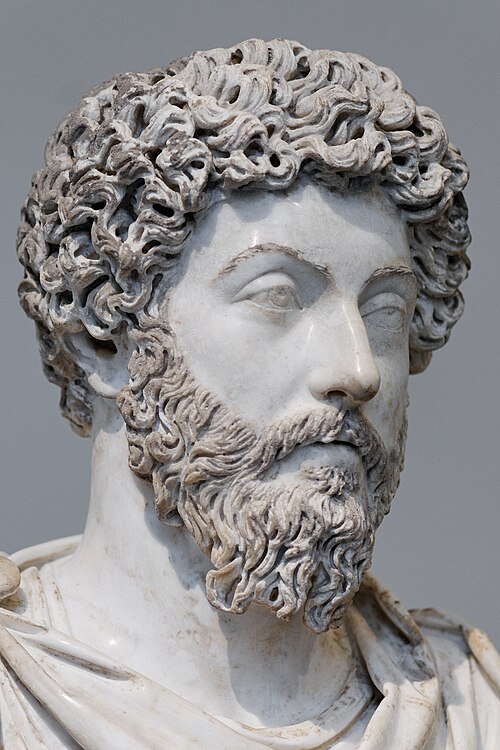
The Stoic may lose position, property, recognition, or security. But the ability to distinguish right from wrong, to govern one’s response, and to act according to reason remains, at least in principle, one’s own. The surrounding world may be chaotic, unjust, or indifferent. The individual can nevertheless preserve an inner, clear, and stable order.
This is the famous Stoic “inner citadel”: not an escape from reality, but a domain of moral agency that cannot be surrendered without one’s willful and direct cooperation.
It is not difficult to understand why this speaks, perhaps in particular, to the modern office or factory worker.
The Employee’s Philosophy
Most people go to work inside institutions they did not create.
They enter companies, schools, hospitals, government agencies, universities, nonprofits, churches, and professional firms whose purposes, procedures, hierarchies, and measures of success were established before they arrived.
They have job descriptions. They have supervisors. They play roles. They are evaluated, rewarded, overlooked, promoted, reassigned, or dismissed. Even where the bureaucracy is informal, it is authentic. There are accepted ways of speaking, institutional habits, limits on authority, and judgments about who is considered cooperative, difficult, promising, or expendable.
The employee acts, but does not fully author the actions that they undertake.
A person may prepare a report without deciding why the report is necessary. A teacher may teach within standards created by others. A manager may administer policies he did not design. A physician may practice within a hospital system whose financial and procedural logic shapes every encounter. A nonprofit employee may believe deeply in the mission while remaining subject to donors, boards, and senior leadership.
For the majority of employees, the characteristic problem is therefore one of divided agency. He remains responsible for his work, but lacks final authority over its conditions and larger purposes. Stoicism as an attitude, if not as a philosophy, is naturally powerful in this setting.
Stoicism invites us to distinguish the quality of his work from the recognition it receives. It separates moral worth from title, status, and advancement. It reminds him that a superior may control assignments and rewards but does not possess final authority over his inner judgment or attitude.
The institution may determine the office. It does not have to determine the person. This is more than a strategy for reducing stress. It is a theory of freedom.
An office or factory worker can decide to perform an assigned role conscientiously without allowing the role to define the whole of his identity. He can work well without making institutional approval the measure of his worth. He can accept that promotion, praise, policy, and organizational politics are not fully under his control while refusing to surrender what is: honesty, preparation, fairness, courage, restraint, and attention.
Stoicism also offers a kind of help with the emotional life of institutions. Bureaucracies generate frustration partly because they repeatedly confront people with the gap between responsibility and power. Employees are held accountable for outcomes they cannot fully control, asked to cooperate with decisions they did not make, and required to remain professional in circumstances that may not deserve composure.
The Stoic response is not that these things do not matter: It is that they must not be allowed to possess the whole self.
But this is also where Stoicism becomes dangerous.
When Endurance Becomes Accommodation
A philosophy of endurance is attractive not only to those who suffer within institutions. It can also be attractive to the institutions themselves.
The ideal employee, from the bureaucracy’s point of view, may be calm, disciplined, conscientious, undemanding, and prepared to accept what cannot be changed. Such a person remains productive through reorganizations, budget cuts, foolish and self-destructive policies, difficult supervisors, and shifting priorities.
Stoicism can therefore become an ethic of accommodation.
The distinction between what is and is not within our control may be interpreted too narrowly. An employee may describe as “external” something he actually has a duty to contest. He may accept injustice because resistance seems unlikely to succeed. He may confuse emotional composure with moral wisdom.
Patience can become passivity. Acceptance can become complicity. Professionalism can become obedience.
The real Stoic tradition is more demanding than this caricature. It does not teach that social roles automatically generate legitimate duties or that established authority deserves unquestioning submission. The Stoic remains a rational and moral agent before he is an employee.
Yet the danger is genuine. Every philosophy has characteristic distortions, and the institutional distortion of Stoicism is the production of people who bear unreasonable conditions nobly when they should instead speak, resist, or leave. At the core of it, Stoicism is an ethic of accommodation in a world in which one acknowledges first a loss of control.
Practical wisdom must distinguish between what truly cannot be changed, what cannot be changed immediately, what can be resisted only at a cost, and what must not be accepted even when resistance will fail.
The Founder’s Philosophy
Entrepreneurs face a different problem. The entrepreneur is not primarily trying to preserve agency within someone else’s structure. The entrepreneur is working to create a structure out of chaos.
That distinction changes everything.
The founder chooses the enterprise, defines its purposes, establishes its standards, and decides—within the limits imposed by markets, law, capital, customers, and circumstance—what kind of institution it will become.
Entrepreneurship therefore appears to offer an escape from the condition that makes Stoicism so attractive. The founder does not merely occupy a role. He creates roles. He does not merely accept institutional purposes. He helps determine them.
This is one reason entrepreneurship is so often described in the language of freedom. But entrepreneurial freedom carries a distinctive danger: the absence of natural limits.
The employee’s ambitions are often bounded by an existing hierarchy. There are only so many promotions available. The role has a title, a salary range, and a place within an organization. In contrast, the founder’s field of ambition is more open.
A business can always grow larger. Revenue can always increase. Another market can be entered. Another location can be opened. Another product can be created. Another competitor can be overtaken. A new opportunity can be pursued.
The entrepreneur may leave a hierarchy behind only to discover that he has internalized a more demanding master.
The employee can leave work at the office whereas the founder carries the company mentally at all hours. The business becomes entangled with personal identity, security, reputation, family, and hope. A failure of the enterprise can feel like a failure of the self. A success can generate, not satisfaction, but a larger target in need of an even more alert defense.
This is where the ancient philosophy that seems most relevant may not be Stoicism at all.
It may be Epicureanism.
The Neglected Alternative
Epicureanism arose from many of the same historical conditions as Stoicism. It too addressed people living in a world of political instability, social competition, insecurity, and diminished control over public life.
But it offered a different answer.
Where the Stoic asks how one can remain inwardly free while fulfilling one’s role in a difficult world, Epicurus asks how many of the world’s demands deserve to govern us in the first place.
Epicureanism is often misunderstood as a philosophy of luxurious pleasure. In ordinary language, an “Epicurean” is someone devoted to fine food, wine, and sensual enjoyment.
The historical Epicurus taught nearly the opposite.
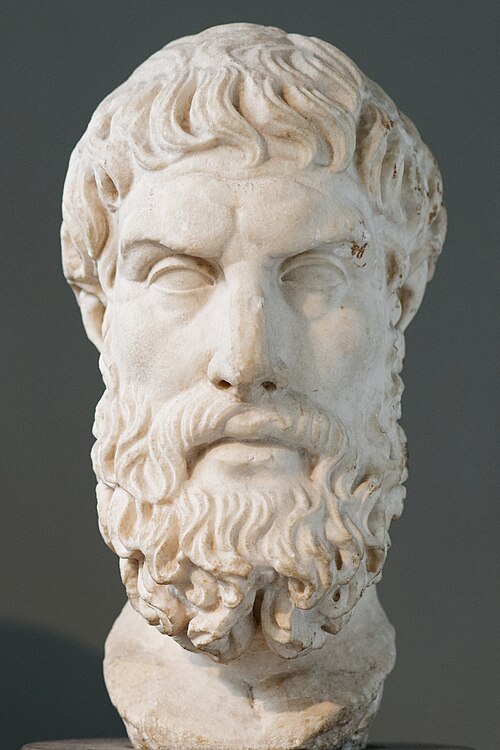
He argued that the pursuit of luxury often makes people less free because it increases dependence. The person who requires rare pleasures is more vulnerable to disappointment than the person who can be satisfied by simple ones. The goal was not excess, but tranquility: freedom from bodily distress, irrational fear, and the endless agitation of unsatisfied desire.
But Epicurus took the point even deeper than that as he distinguished between different kinds of desire.
Some desires are natural and necessary. We require food, shelter, security, friendship, and freedom from severe pain. These desires have intelligible limits. Hunger can be satisfied. Shelter can be secured. Friendship can be cultivated.
Other desires are natural but unnecessary. We may enjoy luxury, variety, beauty, and comfort beyond what is required. These are not inherently wrong, but they must be judged by their consequences.
Still other desires are empty or vain: the desire for unlimited wealth, fame, power, status, and superiority over others. These desires are dangerous because they contain no natural point of completion. They are a kind of hunger than can never be satisfied.
This is an extraordinarily useful distinction for the entrepreneur.
Revenue has no natural endpoint. Market share has no natural endpoint. Prestige has no natural endpoint. Comparative success has no natural endpoint.
Once the business becomes organized around a desire that cannot be satisfied, the entrepreneur may achieve every stated goal without ever arriving at contentment.
The problem is not that the founder lacks discipline. The problem may be that discipline is serving a desire with no terminus.
The Theory of Enough
Modern entrepreneurial culture contains many theories of growth and few theories of sufficiency.
It teaches founders how to scale, optimize, expand, compete, and persevere. It celebrates the ability to tolerate uncertainty, work through exhaustion, recover from failure, and pursue long-term goals.
These are recognizably Stoic virtues.
But the entrepreneur may need to also address a different set of questions:
- How much growth is genuinely useful?
- What is the business supposed to make possible?
- At what point does expansion begin to reduce freedom rather than increase it?
- Is greater revenue producing greater security, or merely creating a larger structure that must be defended?
- Is the founder building a company, or is the company consuming its founder?
These are Epicurean questions because they ask us to distinguish real goods that satisfy genuine needs and satiable wants from manufactured ambitions and addictions.
Epicurus does not require the entrepreneur to become passive. He does not forbid enterprise, craft, planning, risk, or productive effort. What he asks is that these activities remain subordinate to a defensible theory of happiness.
A business may make many genuine goods possible. It can provide security, independence, friendship, intellectual challenge, useful service, creative expression, and opportunities for others. It can become a community organized around trust and shared work. It can allow a founder to build a form of life not available within inherited institutions.
In this sense, the products of entrepreneurship can have an Epicurean dimension at its best.
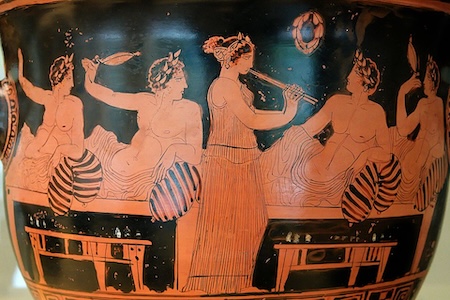
Epicurus himself created a community outside the dominant structures of public ambition. The Garden was not simply a retreat. It was an alternative arrangement of life, organized around friendship, inquiry, modest security, and freedom from the status competition of the wider world.
A company can also become an alternative institution.
The founder can determine what kinds of relationships it will cultivate, what pace of work it will demand, what it will reward, how it will define success, and whether people will be treated as instruments or as participants in a shared project.
The deepest entrepreneurial question may therefore not be:
How large can this become?
It may be:
What kind of life is this enterprise being built to support?
The Epicurean Danger
Epicureanism has its own risks.
Its suspicion of public ambition can become withdrawal from responsibility. Its praise of tranquility can become avoidance of difficulty. Its emphasis on friendship and private life can excuse indifference to injustice or unwillingness to undertake demanding projects.
An entrepreneur might invoke the language of sufficiency when the real motive is fear. He might call stagnation moderation, timidity prudence, or lack of imagination contentment.
Some worthwhile achievements require prolonged effort, conflict, uncertainty, and sacrifice. Some responsibilities cannot be discharged without disturbance.
The entrepreneur therefore still needs Stoic courage.
But courage without a theory of the good can become mere capacity for self-exploitation. Endurance is not enough. We must know what the endurance is for.
This is why the difference between Stoicism and Epicureanism is not primarily a disagreement over which personality traits are admirable. Both traditions can praise courage, justice, prudence, moderation, and self-command.
The deeper disagreement concerns the place of virtue within a theory of happiness.
For the Stoic, virtue is itself the essential good. The moral quality of one’s action does not depend upon whether fortune grants success.
For the Epicurean, the virtues are indispensable because they make possible a life of tranquility, friendship, security, and freedom from fear. Prudence is especially important because it teaches us which pleasures to pursue, which pains to accept, and which desires to abandon.
The Stoic asks whether we are acting well within the circumstances given to us.
The Epicurean, in contrast, asks whether the desires organizing those circumstances are worth satisfying.
Two Forms of Freedom
We can now see why Stoicism may be the natural philosophy of the office or factory worker and Epicureanism the natural philosophy of the entrepreneur.
The employee’s freedom is largely ethical and interpretive. He does not control the institution, but he can determine how completely it will define him. He can preserve judgment, dignity, and moral agency within a role whose boundaries were created by others.
The entrepreneur’s freedom is partly constitutional. He can shape the institution itself. He can determine what it values, what it rewards, and what form of life it makes possible.
But because the entrepreneur possesses greater freedom to choose purposes, he also bears greater responsibility for choosing them wisely.
The employee’s danger is surrendering the self to an external structure.
The entrepreneur’s danger is creating a structure that devours the self.
The employee may confuse institutional success with personal worth.
The entrepreneur may confuse perpetual expansion with freedom.
The employee needs to remember that the hierarchy’s judgments are not the final measure of value.
The entrepreneur needs to remember that self-chosen desires can enslave as effectively and as completely as commands imposed by a boss.
Neither philosophy belongs exclusively to either form of life. Employees need the lessons of Epicureanism in order to resist the empty desires institutions manufacture: titles, prestige, access, and the endless pursuit of recognition. Entrepreneurs need the lessons of Stoicism in order to withstand uncertainty, loss, criticism, and the limits of control.
But the contrast remains illuminating.
Stoicism teaches us how to remain free within a set of broader conditions we did not choose.
Epicureanism teaches us to choose conditions that do not, as a sort of backfire, destroy our real freedom.
The wisest working life may require both: Stoic strength in the face of what must be endured and Epicurean judgment about what need never have been pursued.
This leaves us with a more difficult question.
How do we know when endurance is courage and when it is submission? How do we know when is ambition a form of excellence, and when is it serving a kind of empty desire? When is contentment wisdom, and when is it merely fear disguised as moderation?
To answer those questions, we need more than a list of virtues. We need a way to judge how virtues operate within particular lives and circumstances. And for that we will need Aristotle’s account of practical wisdom.
And we must also confront the possibility that even disciplined, tranquil, and self-directed work can remain objectively pointless. And to understand that, we will need Camus—and the image of Sisyphus at work.