Beyond Alignment: The Missing Axis of Competence
The classic alignment system from Dungeons & Dragons is more useful than its critics sometimes allow. At its best, it is not a rigid moral filing system but a compact way of asking two questions about a character. Does this person generally act for others, mainly for themselves, or with active disregard for others? And does this person trust rules, institutions, vows, and stable codes, or instinct, freedom, improvisation, and resistance to authority?
Those questions produce the familiar nine alignments: Lawful Good, Neutral Good, Chaotic Good, Lawful Neutral, True Neutral, Chaotic Neutral, Lawful Evil, Neutral Evil, and Chaotic Evil. The system endures because these tensions are fundamental to storytelling. Hector and Achilles, Antigone and Creon, Elizabeth Bennet and Lady Catherine, Captain America and Tony Stark all differ not merely in whether they are good or bad, but in whether they trust duty, hierarchy, conscience, autonomy, order, or disruption.
Yet the classic alignment system leaves out something essential. It tells us what a character values and how that character relates to order, but it does not tell us whether the character is any good at pursuing those values.
The missing dimension is competence.
For storytelling purposes, competence is broader than intelligence. A character may be educated, perceptive, and verbally clever while still exercising terrible judgment. Another may have little refinement or formal learning but possess excellent instincts, emotional intelligence, self-command, and practical wisdom. Competence includes the ability to understand a situation, anticipate consequences, control impulses, make plans, recover from failure, and translate intention into results.
Once competence is added to alignment, familiar characters become easier to distinguish. A Lawful Good Mastermind is a principled reformer who understands institutions well enough to improve them. A Lawful Good Disaster follows every rule, means well, and ruins everything. A Chaotic Good Mastermind is the brilliant outlaw who breaks the right rules for the right reasons. A Chaotic Good Disaster launches the rescue before anyone has decided how to get home. A Neutral Evil Mastermind quietly converts every relationship into an advantage. A Neutral Evil Disaster betrays everyone and somehow still loses money.
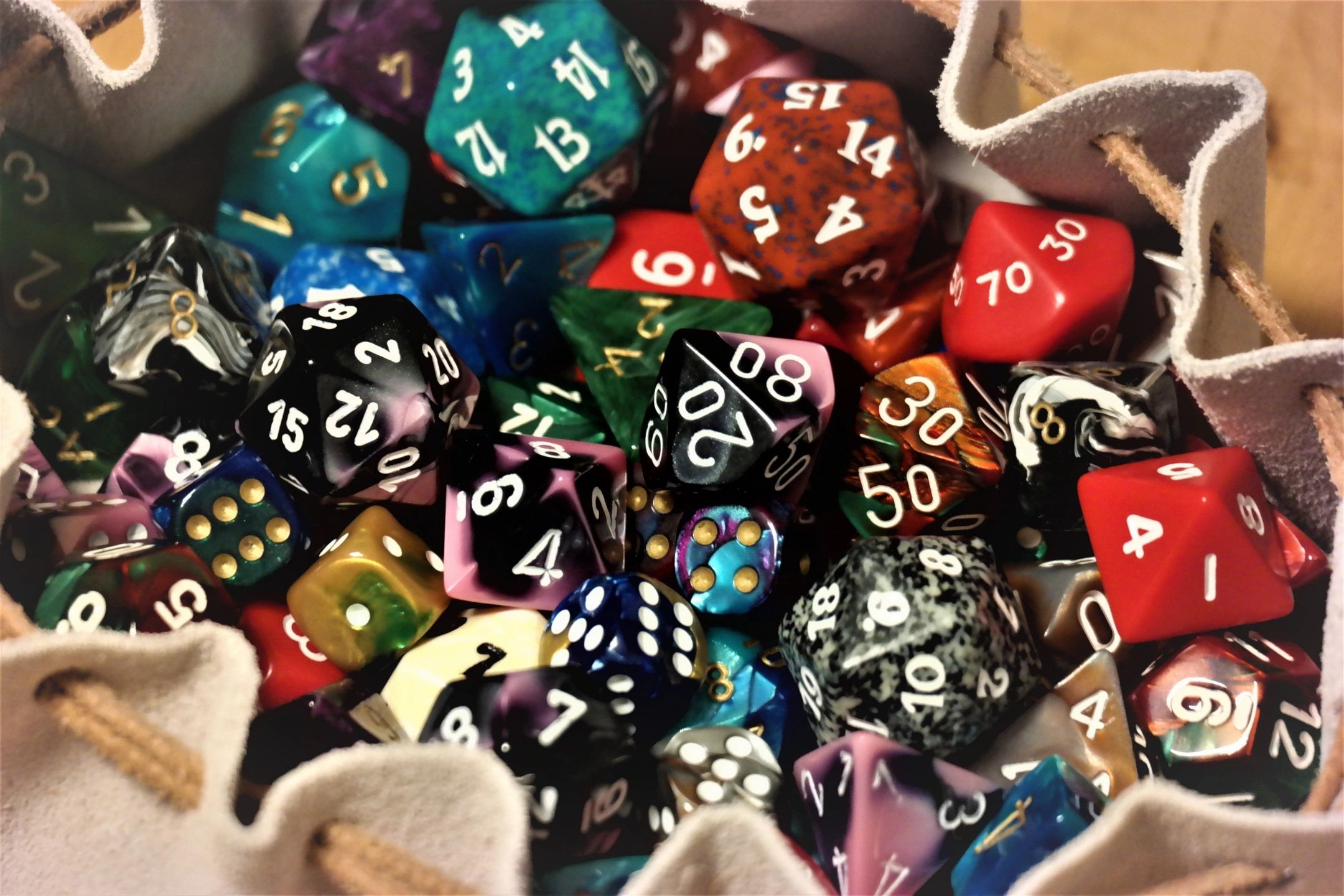
A simple three-part scale—Mastermind, Functional, and Disaster—turns the nine classic alignments into twenty-seven dramatic archetypes. More importantly, it explains tone. High competence joined to evil tends to produce suspense or tragedy. Low competence joined to evil often produces black comedy. High competence joined to good creates heroic capability, while low competence joined to good creates affectionate comedy. High competence joined to chaos produces the charismatic trickster; low competence joined to chaos produces farce.
This expanded system becomes especially useful in ensemble stories, where drama arises from putting characters with incompatible values and wildly different levels of competence into the same situation.
The Big Lebowski as an Alignment Comedy
Few movies demonstrate this better than The Big Lebowski. The Coen brothers were not secretly writing a Dungeons & Dragons morality play, but the film works almost perfectly as an alignment comedy because its characters embody sharply different attitudes toward rules, self-interest, freedom, loyalty, and control.
The Dude is True Neutral, but that description alone does not capture him. He does not seek power, impose order, lead a cause, or deliberately harm anyone. He wants his rug back, wants to bowl, and would prefer that everyone calm down. Yet he is best understood as True Neutral Functional. He is not a mastermind: he gets manipulated, loses track of details, and drifts into danger. But he is not quite a disaster, either. He survives, preserves his identity, occasionally notices what more forceful people miss, and returns to equilibrium. His distinctive competence is endurance. The Dude abides because abiding is the one thing he reliably knows how to do.
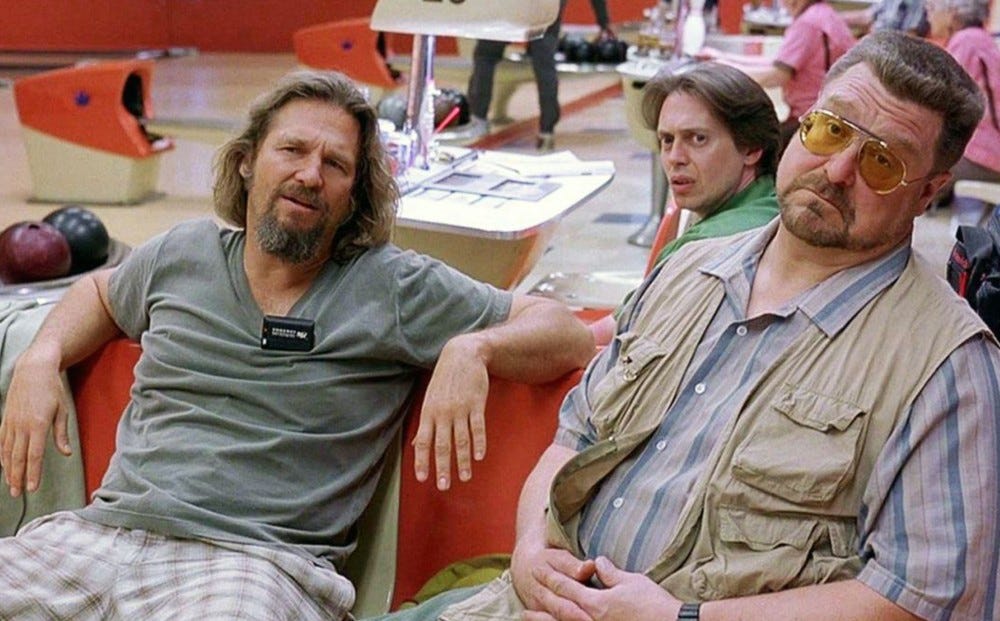
Walter Sobchak is even more revealing. Walter is Lawful Neutral in temperament. He believes in rules, precedent, obligations, loyalty, and clearly marked bowling regulations. “This is not ’Nam. This is bowling. There are rules” may be the purest Lawful Neutral declaration in modern film. But Walter is also a Lawful Neutral Disaster.
Walter is not unintelligent. He knows history, argues forcefully, remembers obligations, and occasionally sees through fraud. His failure is judgment. Every attempt to restore order produces greater disorder. He threatens Smokey over a bowling score, destroys a stranger’s Corvette, mishandles the ransom exchange, and transforms manageable problems into catastrophes. That combination—absolute confidence in rules joined to disastrous execution—is one of comedy’s richest character types.
The other characters fill out the system. Donny is Neutral Good Functional: decent, loyal, harmless, and competent enough to remain a friend and bowl well. Maude Lebowski is Chaotic Good Mastermind: independent, unconventional, theatrical, and several steps ahead of the Dude. Jackie Treehorn is Neutral Evil Mastermind: calm, transactional, and interested in advantage rather than ideology or chaos. The Big Lebowski is Lawful Evil Functional, using wealth, philanthropy, social status, and patriotic rhetoric to disguise cowardice and fraud. The nihilists are Chaotic Evil Disasters: genuinely destructive, yet incapable of constructing a successful plan.
The film’s plot is therefore driven not simply by moral disagreement but by the interaction between alignment and competence. Walter’s need for order, Maude’s strategic autonomy, Treehorn’s self-interest, the Big Lebowski’s fraudulent authority, the nihilists’ destructive ineptitude, and the Dude’s passive resilience all respond differently to the same missing rug and imaginary kidnapping. The rug may tie the room together, but alignment and competence tie the story together.
O Brother, Where Art Thou? and the Comic Odyssey
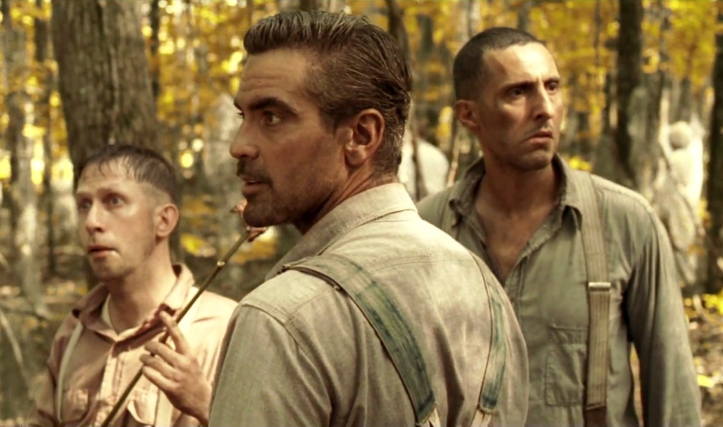
The same framework helps explain O Brother, Where Art Thou?, the Coens’ comic reworking of Homer’s Odyssey. Ulysses Everett McGill is a modern Odysseus: vain, eloquent, deceptive, inventive, resilient, and unable to resist turning practical problems into demonstrations of cleverness.
Everett is best described as Chaotic Neutral Mastermind—or, more precisely, as a man who believes he is one. He distrusts authority, manipulates others, improvises constantly, and places his own goals first. He is not malicious, however, and remains capable of loyalty, courage, and affection. His schemes often work, but not as often or as cleanly as he imagines. His comedy comes from moving between Mastermind and Disaster. He may talk his way out of danger in one scene, then allow vanity or overconfidence to create the next danger. He is highly competent at improvisation and badly deficient in self-knowledge.
Pete is closer to Chaotic Good Functional: volatile and suspicious, but loyal. Delmar is Neutral Good Disaster: warmhearted, credulous, sincere, and frequently in need of supervision. Big Dan Teague is Neutral Evil Mastermind in miniature, calmly exploiting trust for profit. Sheriff Cooley is Lawful Evil Functional, enforcing authority without mercy, while the blind prophet resembles a True Neutral Mastermind who understands the shape of the journey without attempting to control it.
The film inherits this structure from The Odyssey. Odysseus is not a simple moral hero. He lies, disguises himself, manipulates allies, takes risks, and repeatedly lets pride complicate survival. He is a Chaotic Good or Chaotic Neutral Mastermind whose competence is periodically sabotaged by ego. Penelope, meanwhile, is a Lawful Good Mastermind who preserves the household through fidelity, patience, intelligence, and controlled deception. The suitors are Lawful Evil Disasters: they exploit the formal protections of hospitality while failing to understand the power they have provoked.
Both the ancient poem and the modern film understand that intelligence does not eliminate folly. Often the most dangerous weakness of the clever character is the belief that cleverness makes failure impossible.
Shakespeare’s Masterminds and Disasters
Shakespeare’s plays become especially vivid under this three-axis system because he repeatedly separates morality from practical ability.
In Hamlet, Claudius is Lawful Evil Mastermind. He gains power through murder, then stabilizes that crime through ceremony, administration, diplomacy, surveillance, and political performance. He does not seek disorder. He wants Denmark to function smoothly under the authority he acquired illegitimately.
Hamlet imagines himself as a Chaotic Good Mastermind. He recognizes corruption, distrusts appearances, resists authority, and attempts to expose truth through improvisation and theater. In practice, however, he is frequently a Chaotic Good Disaster. He is brilliant in interpretation but unreliable in execution. His intelligence produces delay, cruelty, experimentation, and collateral damage because he cannot translate perception into controlled action. His tragedy does not arise from stupidity but from possessing a powerful mind without reliable command over when and how to act.
Polonius is a Lawful Neutral Disaster. He believes in hierarchy, convention, surveillance, paternal advice, and court procedure, talks constantly, understands little, and eventually dies while hiding behind a curtain. Horatio is Lawful Good Functional: loyal, rational, restrained, and competent enough to preserve the truth after the more dramatic characters destroy themselves.
King Lear offers similar patterns. Lear begins as a Lawful Neutral Disaster, possessing immense authority without corresponding judgment. He mistakes performance for love, obedience for loyalty, and office for wisdom. Kent is Lawful Good Functional, remaining loyal to the true obligations of service even after formal authority rejects him. The Fool is Chaotic Good Mastermind, using nonsense, mockery, and inversion to say what orderly language cannot. Edmund is Neutral Evil Mastermind, understanding the system of legitimacy well enough to exploit both its injustices and its weaknesses.
Shakespeare repeatedly shows that goodness without competence is vulnerable, competence without goodness is dangerous, and authority without judgment is catastrophic. That formula explains more dramatic behavior than good-versus-evil classification alone.
Florida as an Alignment Pressure Cooker
Florida literature is particularly well suited to this framework because Florida itself places formal order and radical improvisation side by side. The state contains gated communities, zoning boards, corporate resorts, condominium associations, retirement developments, police departments, and elaborate property systems. It also contains hurricanes, swamps, invasive wildlife, transient populations, speculative booms, eccentric businesses, con artists, and people attempting to reinvent themselves.
Lawful Florida and Chaotic Florida often occupy adjacent lots.
Carl Hiaasen’s novels can seem almost pre-adapted to an alignment chart. His stories frequently contain a Chaotic Good local, a Neutral Good environmentalist, a Lawful Neutral official, a Lawful Evil developer, a Neutral Evil fixer, and at least one Chaotic Evil Disaster whose incompetence turns corruption into farce. His villains are not interchangeable. One may weaponize permits, attorneys, and political donations. Another simply wants money. A third is driven by vanity, violence, and terrible judgment. Their relationships to order matter as much as their selfishness.
Hiaasen’s heroes tend to be competent enough to expose wrongdoing but too unconventional to operate comfortably through official channels. They are often Chaotic Good Functional or Chaotic Good Mastermind figures. His comic criminals occupy the lower-competence evil categories: Neutral Evil Disasters and Chaotic Evil Disasters who betray, threaten, steal, and destroy without the discipline required to benefit from any of it.
John D. MacDonald’s Travis McGee is a classic Chaotic Good Mastermind. He lives outside ordinary career structures, distrusts institutions, follows a private moral code, and uses unconventional methods against predators. His enemies are often Neutral Evil Functional or Mastermind figures: polished, practical people who treat other human beings as resources.
Elmore Leonard’s Florida fiction is similarly attentive to competence. His criminals are not divided merely into bad people and worse people. Some are disciplined professionals; others are vain amateurs. Some understand violence, while others mainly enjoy talking about it. Some follow a criminal code, while others betray everyone impulsively. The difference between a Neutral Evil Mastermind and a Chaotic Evil Disaster is often the difference between menace and comedy.
Tim Dorsey’s Serge Storms creates an even stranger problem. Serge imagines himself as Chaotic Good: a defender of Florida history and a punisher of the deserving. In practice, he moves among Chaotic Good, Chaotic Neutral, and Chaotic Evil depending on whether we judge his motives, methods, or actions. His encyclopedic knowledge and elaborate planning make him a Mastermind, while his mania constantly threatens to turn him into a Disaster. That instability is central to the character and cannot be captured through morality alone.
Florida intensifies the competence axis because every plan remains vulnerable to the environment. A developer may have permits, lawyers, financing, and political support, yet a hurricane, sinkhole, alligator, or unstable accomplice can overturn the whole system. The natural world is neither good nor evil and not lawful or chaotic in any human sense. It simply refuses to respect anyone’s plan.
This makes Florida a nearly perfect alignment laboratory: a Lawful Evil developer, a Neutral Evil consultant, a Chaotic Evil idiot, and a Chaotic Good eccentric all pursue the same property while a Lawful Neutral official processes the paperwork and a hurricane approaches. The plot is already underway.
A Better Tool for Role-Playing Games
Adding competence could immediately improve role-playing games. Traditional alignment often becomes restrictive when players treat it as a command rather than a description. A player writes “Lawful Good” on a character sheet and then feels required to behave like an abstract moral category. The result can be rigidity, argument, and caricature.
Competence makes alignment playable. A Lawful Good Mastermind and a Lawful Good Disaster may share the same values while producing completely different scenes. The Mastermind studies the corrupt institution, gathers allies, identifies the legal pressure point, and reforms it. The Disaster reports the conspiracy to the corrupt official because official channels must be respected.
A Chaotic Good Mastermind plans a prison break, bribes the correct guard, prepares disguises, and leaves no innocent person behind. A Chaotic Good Disaster hears that someone has been unjustly imprisoned and immediately attacks the front gate. A Neutral Evil Mastermind cultivates relationships, preserves plausible deniability, and profits regardless of which faction wins. A Neutral Evil Disaster steals from the party during a siege and discovers that the only escape route belonged to the people just betrayed.
These distinctions give players more than a moral label. They suggest habits of action. A character sheet might ask three questions: What does the character value? How does the character relate to order? In which situations is the character a Mastermind, Functional, or a Disaster?
The final question matters because competence need not be universal. A character may be a Mastermind in court politics and a Disaster in the wilderness. A brilliant wizard may possess no practical judgment. A foolish-seeming barbarian may have exceptional tactical and emotional intelligence. That produces richer characters than treating a single Intelligence score as a complete measure of judgment.
The same framework helps game masters build productive party conflict. A group containing a Lawful Good Disaster, a Chaotic Good Mastermind, a True Neutral Functional character, and a Neutral Evil Mastermind contains immediate dramatic possibilities. They may agree on the goal while disagreeing about authority, methods, risk, and who is manipulating whom.
It also makes nonplayer characters easier to create. “Lawful Evil” is broad; “Lawful Evil Mastermind who controls the city through debt law” is a villain. “Chaotic Neutral” is broad; “Chaotic Neutral Disaster who knows one vital secret but cannot tell the story in the correct order” is an encounter. “Neutral Good” is broad; “Neutral Good Functional innkeeper who will hide the fugitives but refuses to join the revolution” is a person.
A Better Tool for Stories
The three-axis system is equally useful for readers and writers. It explains why characters with the same traditional alignment can feel completely different. Two heroes may both be Chaotic Good, but one is an expert insurgent and the other is a lovable catastrophe. Two villains may both be Lawful Evil, but one is an architect of oppression while the other is a petty bureaucrat protected by an institution more competent than he is.
It also helps reveal where plots come from. Stories often begin when a character’s self-image does not match their actual level of competence. Everett believes he is always a Mastermind. Hamlet believes sufficient thought will eventually produce perfect action. Lear believes authority proves judgment. Walter believes certainty proves competence. The Big Lebowski believes status proves virtue.
Each is wrong in a different way.
For writers, the framework offers a practical series of questions. Does this character understand what they are doing? Are they effective for the right reasons, or successful by accident? Do they create order, preserve it, misuse it, or misunderstand it? Does competence make their morality more powerful or merely more dangerous? What happens when they enter a setting where their usual competence fails?
The most interesting characters may also move along the competence axis. Odysseus shifts from Mastermind to Disaster when pride takes control. Hamlet alternates between paralysis and reckless action. Michael Corleone becomes more competent as he becomes more morally compromised. The Dude remains Functional partly because he refuses the ambitions that destroy more capable people.
Character development can therefore involve more than a change in moral alignment. A Disaster may acquire judgment. A Functional character may become a Mastermind. A Mastermind may become so confident that success itself produces catastrophe.
The Third Question
The classic alignment system remains useful because it condenses enduring moral tensions into a memorable form. It asks what a character serves and how that character relates to order. Adding competence supplies the third question: can the character actually pull it off?
Together, the three questions generate an enormous range of recognizable types. The Lawful Good Disaster follows every rule and ruins everything. The Neutral Good Functional quietly does what decency requires. The Chaotic Good Mastermind breaks open the system and gets everyone out. The Lawful Neutral Disaster enforces a rule nobody understood. The True Neutral Functional keeps bowling. The Chaotic Neutral Mastermind appears lost while manipulating the whole room. The Lawful Evil Mastermind writes the contract. The Neutral Evil Functional asks what is in it for him. The Chaotic Evil Disaster sets fire to the getaway car.
This framework does not replace literary criticism, moral philosophy, psychology, or careful character development. Nor does it suggest that Homer, Shakespeare, the Coens, Hiaasen, MacDonald, Leonard, or any other writer secretly worked from a gaming chart. Its value is simpler. It gives us a compact language for something stories have always understood: people differ not only in what they believe and what they want, but in whether they understand the world well enough to achieve it.
Morality determines the destination. Alignment shapes the route. Competence decides whether the character arrives—or whether the vehicle explodes in the parking lot.