
The American Half of Analytic Philosophy
At 250, a tradition worth reclaiming
The 250th anniversary of the Declaration of Independence is an occasion not only for reflecting on our unique politics but for wider and deeper intellectual self-examination. It invites Americans to ask what this country has contributed to the world’s longstanding arguments about reason, truth, freedom, science, language, and human life.
That question is especially interesting in philosophy, where Americans have often been taught a story in which the decisive innovations in the last century or so have came from elsewhere. The standard history of analytic philosophy begins in Central Europe and Britain: Frege’s revolution in logic and semantics; Russell and Moore’s revolt against idealism; Wittgenstein’s two great transformations; the Vienna Circle’s vision of scientific philosophy; Oxford ordinary-language philosophy; then the later work in logic, language, mind, and metaphysics that became the core of the discipline.
America enters the story later. It appears as the place where émigré scholars found refuge before, during and after the Second World War, where logical empiricism was institutionalized, where British philosophical styles were taken up by a vast university system, and where talented successors such as Quine, Davidson, Putnam, Kripke, Goodman, and Sellars carried an already formed tradition forward.
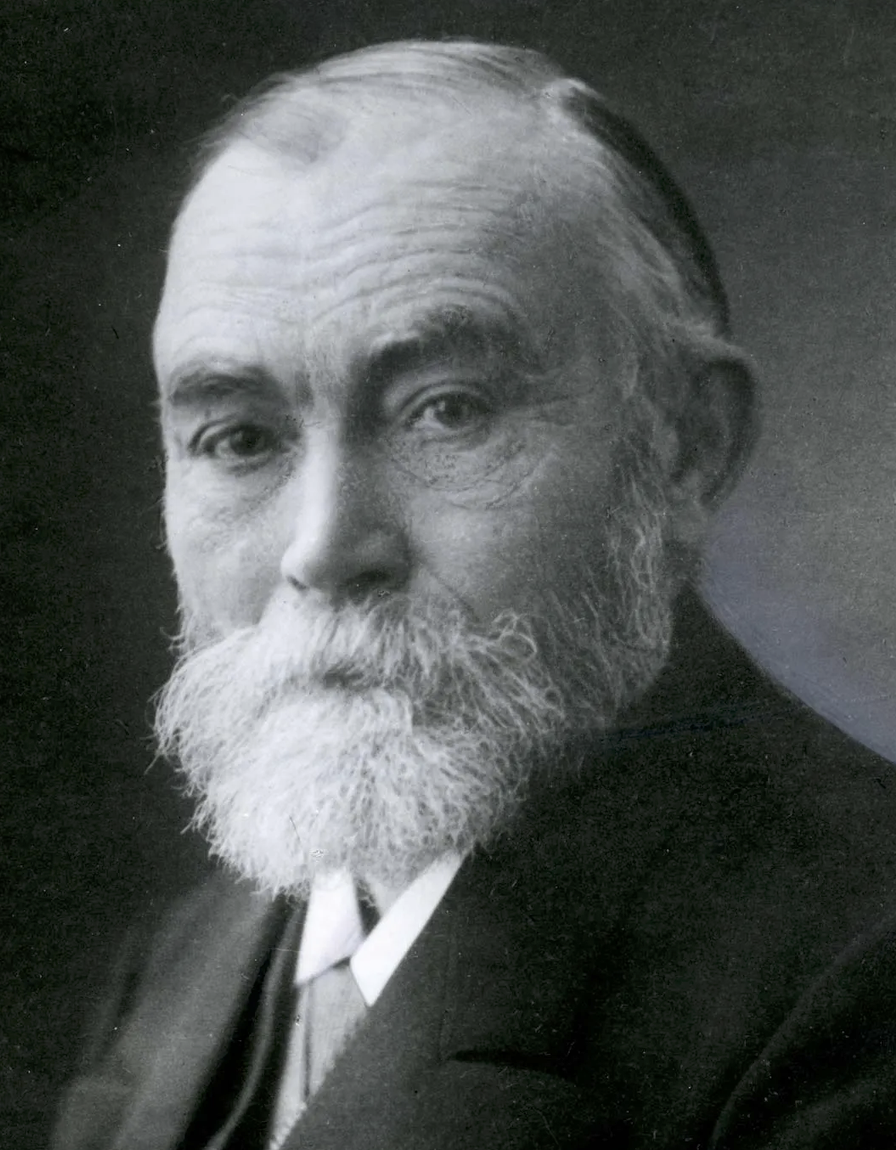
There is some truth in this history. Frege changed philosophy. Russell and Wittgenstein changed it again. Carnap, Tarski, and the Vienna Circle reshaped its ambitions. Any serious account of the twentieth century has to begin with the German, Austrian, and British sources of the analytic movement.
But it is a mistake to regard American philosophy as nothing more than an accessory to that inheritance. American pragmatism was not merely a local variation on British empiricism. It was not a charming but comparatively loose American response to the precision of European logic. Nor was it merely an early prelude to the supposedly more mature analytic philosophy that followed. It was a distinctive and powerful attempt to understand logic, meaning, inquiry, objectivity, and truth. Later American philosophers did not simply inherit analytic philosophy. They changed its center of gravity by forcing its questions into conversation with science, action, social practice, fallibilism, interpretation, democratic life, and the conditions under which human knowledge is produced and shared with others.
The story is not Europe first and America afterward. It is the story of a transatlantic partnership. Analytic philosophy is better understood as an ongoing argument among several intellectual centers than as a single inheritance passed intact from Frege to Russell to the English-speaking academy.
That matters especially now. The distinctive American contribution to this story was not to make philosophy less rigorous. It was to ask what rigor is for, how reason operates in actual inquiry, and how truth-seeking becomes possible among people who are fallible, socially situated, historically conditioned, and nevertheless capable of learning and adapting.
The American Stance
The Declaration is not itself a work of analytic philosophy, of course. But it embodies an intellectual posture that is philosophically relevant and timely: principles must be made public, subjected to justification, translated into institutions, and tested within collective life. The Declaration’s political concepts were inherited from a larger Enlightenment world, yet the American experiment was not merely a recitation of European political theory. It placed those concepts into a new practical setting: a people attempting to build a political order in which public reason, disagreement, self-government, institutional design, revision, and accountability would have to be lived rather than merely contemplated.
American philosophy in the 20th Century did something parallel. It took inherited questions about truth, knowledge, reason, and meaning and asked what they become when they are situated in inquiry rather than in detached contemplation; in revision rather than in certainty; in communities of interpreters rather than in isolated minds; in social practices rather than in a thinker’s private encounter with ideas.
That is the central intellectual gesture of American pragmatism.
Charles Sanders Peirce, the founding figure of American pragmatism—later renamed by him “pragmaticism”—was not a philosopher who traded rigor for common sense or practical convenience. He was one of the great logicians of the nineteenth century. His work on relations, quantification, signs, inference, probability, scientific method, and the logic of discovery belongs in any serious account of modern logic.
Yet Peirce began from a philosophical pressure somewhat different from Frege’s.
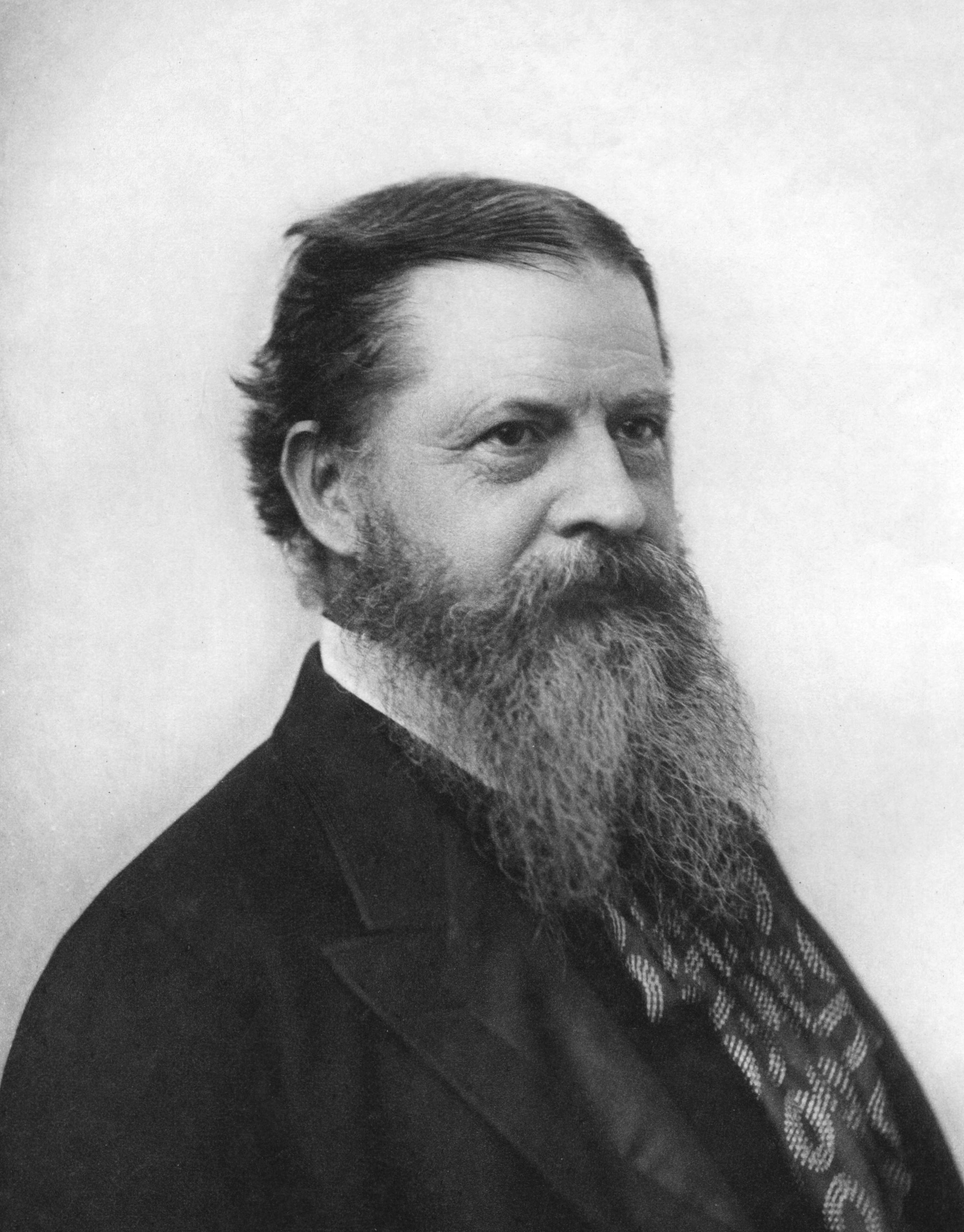
Frege’s great question is not simply how language can become public, but how thought can lay any claim to any sort of objectivity or at least intersubjectivity. How can logical laws, meanings, numbers, and truths avoid reduction to the changing mental lives of individual thinkers? How can the content of a judgment be something that different people may grasp, affirm, deny, dispute, and recognize as true or false, rather than an image, sensation, or psychological occurrence belonging only to one mind?
Frege’s answer is to distinguish thoughts sharply from both physical objects and private mental states. A thought is not a thing in the material world, but neither is it an event in anyone’s consciousness. There is an objectivity to the content: something that can be grasped by many thinkers, expressed by a sentence, and stand in logical relations independently of anyone’s particular associations, feelings, or acts of thinking. Language therefore matters enormously for Frege, because sentences are the primary vehicles through which thoughts are expressed and communicated.
But the objectivity of thought does not consist merely in its being publicly utterable. It rests on Frege’s more radical anti-psychologism: the truth of a thought and its place in logic do not depend on whether anyone happens to believe, understand, or entertain it.
Peirce shared Frege’s anti-psychologism and his respect for logic. He was equally opposed to the idea that thought could be understood merely as a stream of private impressions. But Peirce began with a different question: How can inquiry move from doubt to belief? How can signs function in interpretation? How can error be corrected? How can a community of investigators, none of whom possesses final certainty, nevertheless orient itself toward truth?
Frege asks: What makes objective thought possible?
Peirce asks: What makes objective inquiry possible?
The difference is easy to overlook because both philosophers are working in the neighborhood of logic, language, and meaning. But the differences in approach have profound consequences.
Frege’s philosophical architecture is built around sense, reference, truth, logical form, and the public character of thought. Peirce’s architecture is built around signs, inferential consequences, habits of action, doubt, investigation, and the long-run self-correction of inquiry. Frege gives us an account of how thought can escape psychology. Peirce gives us an account of how human beings can escape the prison of private conviction.
These are not competing projects in the ordinary sense. Each exposes a problem that the other needs. Frege shows why truth cannot simply be what an individual happens to believe. Peirce shows why truth cannot be understood adequately unless we ask how believers, investigators, and interpreters can discover their error, revise their commitments, and continue inquiry together.
One begins with logic and language. The other begins with signs and inquiry. Both insist that thought must be public, disciplined, and answerable to something beyond subjective conviction.
That already complicates the standard narrative of analytic philosophy. The American tradition was not waiting for Fregean philosophy to arrive before it became serious about logic and meaning. Peirce was developing his own powerful account of signification, reference, inference, and truth at almost the same historical moment. His semiotic was not a vague anticipation of later philosophy of language. It was an ambitious theory of how signs represent objects, generate interpretations, and acquire significance within inferential and practical life.
A more adequate history would therefore not say that Frege discovered the philosophical importance of logic and language while America later absorbed the lesson. It would say that Frege and Peirce illuminated two indispensable dimensions of the modern philosophical project: the objectivity of thought and the practice of inquiry.
Dummett’s Analytical Context
This becomes clearer when we turn to Michael Dummett’s great interpretation of Frege. Dummett helped establish the modern image of Frege as the founding figure of analytic philosophy not simply because Frege invented crucial logical techniques, but because he made the theory of meaning central to philosophy. On Dummett’s telling, the decisive Fregean insight is that if we want to understand thought, we must understand language; and if we want to understand meaning, we must explain the role expressions play in sentences, truth conditions, inference, and communication.
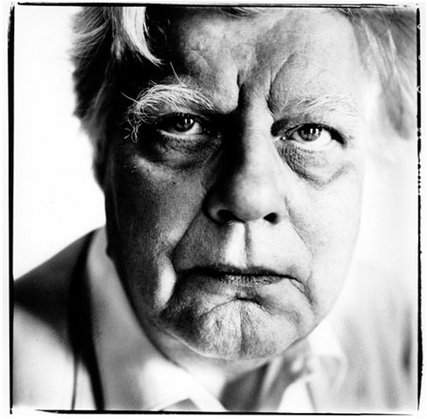
It is a magnificent insight. It explains why so much twentieth-century philosophy turned toward language. Truth, reference, compositionality, logical form, indirect discourse, and the public character of thought are not merely specialized problems. They concern the medium through which philosophy becomes answerable to logic rather than to private psychology.
But Dummett’s story can become too narrow if it becomes the whole story. It can make analytic philosophy appear to be unified primarily by a theory of meaning. That description captures a great deal: Frege, Russell, Carnap, Tarski, Davidson, and formal semantics all belong naturally within this line.
Yet it leaves out a second question that pragmatism places at the center:
What is the relation between meaning and the practices through which human beings inquire, act, revise, interpret, and live together?
American philosophy has repeatedly returned to this question.
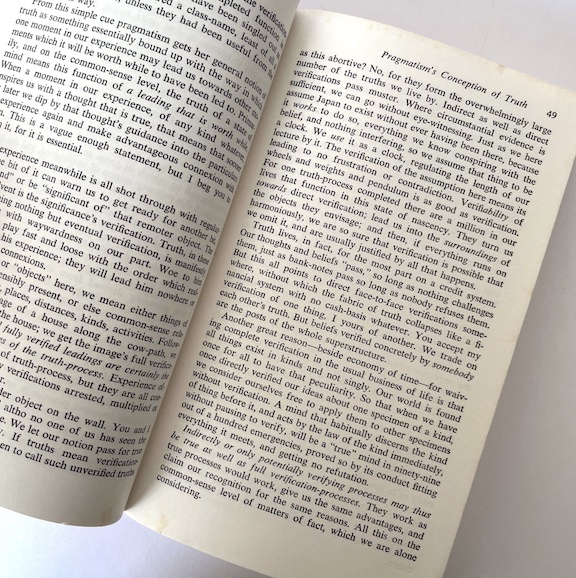
William James insists that concepts must be judged by the difference they make to experience and conduct. John Dewey shifts attention from static knowledge to intelligent problem-solving within education, science, institutions, technology, and democratic life. C. I. Lewis investigates the relation between conceptual frameworks and empirical experience. Peirce develops a fallibilist picture in which inquiry is irreducibly communal and in which truth is understood in relation to the ideal end of sufficiently disciplined investigation.
These thinkers are often treated as though they stood outside the main line of analytic philosophy because they are less interested in formal reconstruction or because they range more freely over ethics, politics, education, religion, and culture. But that is partly a result of defining “analytic” too narrowly. Pragmatism is not anti-intellectual. It does not reject logic, science, or conceptual clarity. It asks instead how concepts acquire content within inquiry, testing, correction, and consequence.
A belief that makes no difference to possible reasoning, expectation, action, or evidence risks becoming empty. A conception of truth with no relation to the practices through which truth claims are warranted, challenged, and revised risks becoming detached from human intellectual life. The pragmatists do not reduce truth to immediate utility. Their deeper claim is that truth must be connected to the conditions under which inquiry can genuinely improve.
The Fregean tradition asks how language can carry objective thought. Pragmatism asks how thought, language, and action can be joined within objective inquiry.
The later history of analytic philosophy is largely the history of those questions meeting on American soil.
Philosophy Goes to Harvard
Quine is the ideal figure through whom to see the transformation. He inherited formal logic, ontological seriousness, and the conviction that philosophical questions can often be clarified by attention to language and logical structure. His famous criterion of ontological commitment belongs unmistakably to the post-Fregean world. To ask what exists, Quine asserts, is to ask what entities must be counted among the values of the variables in our best theories.
But Quine also broke with a central aspiration of the older semantic tradition. He rejected the sharp analytic-synthetic distinction. He denied that philosophy could occupy a tribunal outside science, adjudicating conceptual necessity from a secure position above empirical inquiry. He treated our beliefs as an interconnected and revisable system that confronts experience as a whole.
The result is a recognizably American philosophical posture: naturalistic, anti-foundational, fallibilist, and continuous with scientific inquiry.
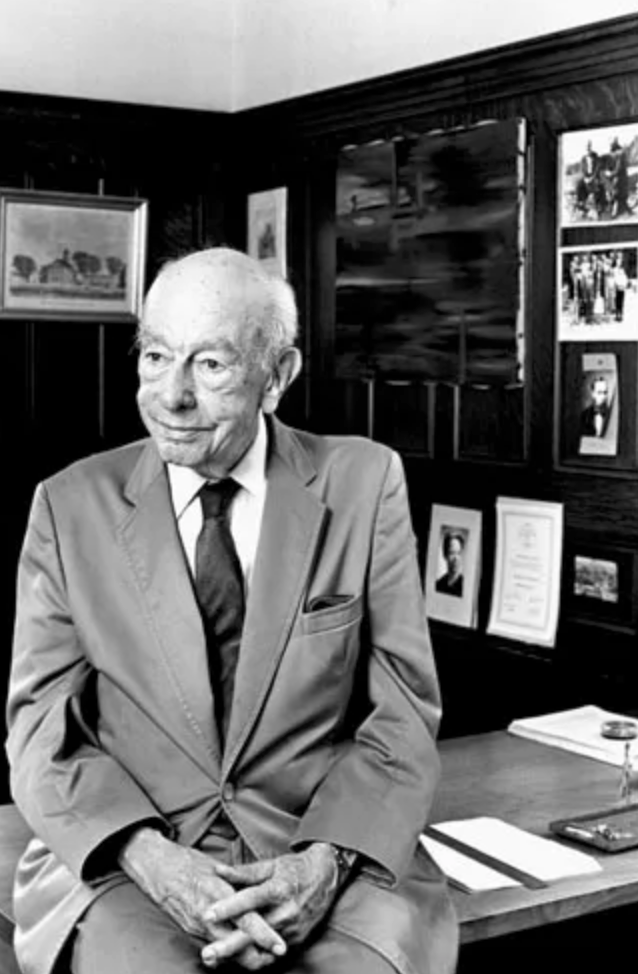
Quine is not Peirce reborn. He is too skeptical about meanings, modalities, signs, and grand metaphysical pictures for that. But he carries forward a pragmatist insistence that philosophy must not pretend to survey science from outside. We are always already within a body of theory. We revise one part in response to experience, predictive power, explanatory gain, simplicity, practical success, and the need to make our total picture of the world cohere.
In Quine, the Fregean concern with logical form is joined to the pragmatist concern with revision and inquiry. That is not a small modification. It changes the self-understanding of analytic philosophy.
A look at Sellars makes the American intervention still clearer. His attack on the “Myth of the Given” rejects the hope that knowledge can rest on an immediate, uninterpreted foundation that simply presents itself to consciousness. The point is not merely epistemological. It concerns the social and normative character of thought. To know, judge, infer, and justify is to occupy a place within what Sellars called “the space of reasons.”
That phrase captures a crucial American development in analytic philosophy. The question is not only what a sentence means, or what object a term refers to. It is also what it is for a thinker to be answerable for a claim; what it is to infer one proposition from another; what it is to correct oneself; and what it is to belong to a community whose members can ask one another for reasons.
Here the pragmatist emphasis on practice meets a broadly Kantian concern with normativity and an analytic concern with language and inference. Meaning is not merely a matter of attaching words to objects. It is bound up with the roles expressions play in reasoning, justification, action, and social correction.
Davidson offers another powerful synthesis. His truth-theoretic semantics belongs directly to the Fregean line. A theory of meaning, for Davidson, should explain how speakers understand indefinitely many sentences by showing how those sentences are systematically connected to truth. But Davidson does not begin from a speaker whose language is already given and simply awaits formal analysis. He begins with radical interpretation: the problem of understanding another speaker without prior access to a settled stock of meanings and beliefs.
Interpretation, belief, truth, action, and the shared world must all be worked out together. The interpreter must assume a broad measure of rationality and truthfulness in the other speaker, not because people are infallible, but because without such an assumption there would be no determinate content to interpret at all.
That is a distinctively American transformation of analytic philosophy. Language is not merely a formal system waiting to be mapped. It is something speakers use in a shared world, under conditions of mutual interpretation, charity, disagreement, error, and correction.
Putnam presses the argument from another direction. His work on reference, semantic externalism, realism, scientific practice, and the limits of formal models repeatedly shows why no account of language can remain wholly detached from the world and from the practices of speakers and investigators. He starts within a tradition shaped by logic and formal semantics, yet he becomes one of its most important internal critics. His work asks whether formal accounts of reference can bear the philosophical weight placed upon them; whether realism can survive without collapsing into a “God’s-eye view”; and whether philosophy can separate its account of meaning from its account of human practices of justification.
This is not a rejection of analytic philosophy. It is analytic philosophy becoming self-conscious about its own limits.
Meaning as Use
The later Wittgenstein and the ordinary-language philosophers complicate the story further. They are often presented as a British reaction against the abstraction and formalism of the Frege-Russell tradition: a turn away from logic toward ordinary speech, concrete examples, conversational nuance, and therapeutic diagnosis.
That caricature is too shallow. The difference is not simply that Frege uses formal notation while Austin discusses excuses and promises. The deeper disagreement concerns what an adequate philosophical explanation should look like.
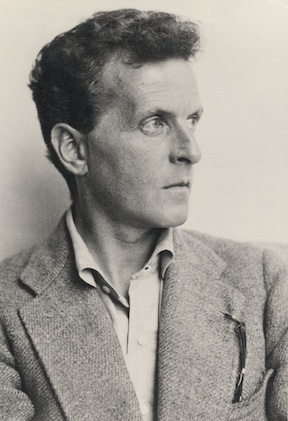
The Fregean-Dummettian impulse seeks a systematic theory of meaning. It wants to explain how truth, reference, logical form, and compositional structure make thought possible. The later Wittgenstein distrusts the ambition to find one underlying account of meaning. He thinks philosophers repeatedly go wrong by supposing that all meaningful words must share some hidden essence: an object, a mental image, a truth condition, a rule, or a common logical form.
Instead, he directs attention to use. Words have their lives within language-games: giving orders, reporting events, making promises, telling jokes, calculating, praying, describing pain, asking questions, offering excuses, expressing grief, and conducting inquiry. Meaning is not one thing. It is woven into a diversity of practices.
This is not merely stylistic modesty. It is a philosophical challenge to semantic essentialism.
Ordinary-language philosophers develop the challenge in their own ways. Austin shows that language does not consist merely of statements that describe facts. We warn, promise, apologize, declare, name, excuse, order, advise, and perform acts through words. Ryle exposes philosophical errors that arise when mental concepts are forced into the wrong logical categories. Strawson explores the ordinary conceptual framework through which persons, objects, responsibility, and reference become intelligible.
They are not saying that ordinary language is automatically correct or that philosophy should simply defer to common usage. They are saying that the distinctions embedded in our practices are evidence. Philosophers cannot abolish them by fiat without first understanding what work they do.
This is where British ordinary-language philosophy and American pragmatism enter into a deep, if incomplete, partnership. Wittgenstein’s emphasis on use, rule-following, shared criteria, and forms of life is not identical with Peirce’s theory of inquiry or Dewey’s account of democracy. Wittgenstein is suspicious of grand philosophical construction in a way that the pragmatists often are not.
But both traditions resist the notion that meaning can be understood through a relation between isolated words and objects detached from practice. Both insist that thought is public. Both locate the intelligibility of language in the activities through which speakers teach, correct, respond, interpret, and act together.
The ordinary-language philosophers often use this insight therapeutically: philosophical confusion is produced by language gone on holiday, by words removed from the circumstances in which they have a role. Pragmatists more often use it constructively: concepts should be understood through their place in inquiry, action, experimentation, and social intelligence.
The Meaning of Analytic Philosophy
The two traditions do not collapse into one another. But neither should they be treated as strangers. This is why “analytic philosophy” remains both useful and inadequate. It is useful because it names a recognizable intellectual style: argument, clarity, logical discipline, conceptual precision, resistance to obscurity, and willingness to make one’s claims definite enough to be challenged.
But it becomes misleading when it is treated as the name of a single method or a single European lineage. It suggests a unity more complete than the tradition possesses. It encourages us to imagine a clean trunk extending from Frege through Russell and Wittgenstein to later professional philosophy, with America appearing as a late and powerful branch.
A better image is one of confluence. Central Europe contributes Frege’s logic and semantics; Brentano’s and Husserl’s neighboring projects; Wittgenstein’s formation; the Vienna Circle’s scientific ideal; Carnap’s reconstruction; Tarski’s account of truth; and the larger Austro-German intellectual world out of which both phenomenology and logical empiricism emerged.
Britain contributes Moore’s realism, Russell’s analysis, the early and later Wittgenstein, Austin’s speech acts, Ryle’s conceptual critique, Strawson’s descriptive metaphysics, and a distinctive attention to ordinary linguistic practice.
America contributes Peirce’s logic of inquiry and signs, James’s practical pluralism, Dewey’s philosophy of intelligence and democracy, Lewis’s conceptual pragmatism, Quine’s naturalism, Sellars’s space of reasons, Davidson’s interpretation, Putnam’s realism and anti-reductionism, Cavell’s moral perfectionism, and a series of later efforts to understand reason as socially embodied and historically revisable.
Every category leaks into the others. Davidson belongs to the Fregean tradition as much as to an American one. Carnap’s American career was central to the formation of postwar philosophy in the United States. Cavell is both deeply Wittgensteinian and unmistakably American. Peirce was a logician whose relevance to analytic philosophy cannot be contained by the label “pragmatist.” Contemporary philosophy has long since become global, and no national map can adequately contain it.
But that is exactly why the American contribution should not be reduced to a geographical footnote. It represents a distinct philosophical pressure that the broader tradition cannot do without.
American pragmatism keeps asking questions that formal semantics and logical analysis alone cannot settle. What makes inquiry self-correcting? What does it mean to treat another person as a fellow reason-giver rather than as an object of prediction? How do concepts operate within institutions, experiments, technologies, and forms of life? What is the connection between truth and the practices by which we identify error? How can reason be both objective and fallible? How can philosophy respect science without becoming merely its handmaiden? How can we understand language without severing it from action?
These are not merely supplementary questions. They concern the conditions under which logic, language, and philosophy can matter to beings like us.
That may be the deepest American contribution: not a rejection of logic or language, but a continuing insistence that logic and language must be situated within inquiry, action, interpretation, and shared life.
It also gives the tradition a democratic dimension. Democracy does not mean that truth is settled by a vote. It does not mean that every belief deserves equal standing, or that expertise is merely another form of opinion. But democratic life depends upon a deeper idea that pragmatism helps articulate: no individual’s private certainty is enough. Inquiry requires public criticism, shared standards, institutions capable of correction, openness to evidence, and the willingness to revise one’s commitments.
Reason, on this view, is not the possession of a class of philosophers who have somehow escaped contingency. It is a public practice: giving reasons, testing hypotheses, challenging assumptions, correcting errors, interpreting one another, revising inherited concepts, and creating institutions that can learn.
That is not a sentimental picture of intellectual life. It is demanding. It requires discipline, humility, courage, and the willingness to be wrong. It asks us to distinguish genuine criticism from mere hostility, evidence from assertion, and revision from surrender.
The American democratic experiment has never fully lived up to its own ideals. Its history includes exclusions, contradictions, violence, and failures that cannot be ignored. But its philosophical significance lies partly in the fact that those ideals became objects of continuing public debate. The country’s principles were never simply possessed; they had to be interpreted, extended, criticized, and made more real.
Pragmatism offers a philosophical analogue. Truth is not a possession handed down from outside inquiry. It is not whatever a culture happens to approve at a given moment. It is the orientation of a practice of correction whose participants remain answerable to the world and to one another.
That idea helps explain why the American role in analytic philosophy matters. The United States did not merely supply a large academic market for European ideas. It supplied a powerful intellectual challenge: show how your accounts of meaning, truth, logic, and knowledge survive when placed within the actual practices of science, interpretation, action, institutions, and democratic disagreement.
Frege and Peirce stand near the beginning of that story. Frege insists that thought must be objective, logically structured, and independent of private psychology. Peirce insists that inquiry must be communal, fallible, and oriented toward truth through self-correction. Wittgenstein shows how philosophical confusion can arise when language is removed from its uses. Dewey shows how intelligence belongs within practical and democratic life. Quine brings logic into continuity with science. Sellars reveals the normative space in which reasons operate. Davidson makes interpretation and shared reality inseparable. Putnam refuses the fantasy that philosophy can describe the world from nowhere.
None of them offers the final word. That is not a weakness of the tradition. It may be its central virtue. At 250 years, the right conclusion is not that America should claim ownership of analytic philosophy. It is that analytic philosophy becomes more intelligible when America is recognized as one of its authors.
The tradition’s deepest history is not the triumph of language over metaphysics, nor the triumph of formal logic over speculation. It is the continuing attempt to understand how thought can be objective without becoming inhuman; how language can be public without becoming mechanical; how truth can guide inquiry without pretending that any generation has final possession of it; and how reason can be rigorous while remaining embedded in action, interpretation, and shared life.
That is a transatlantic inheritance. But America did not merely receive it. America helped make it what it is.