Sisyphus at Work
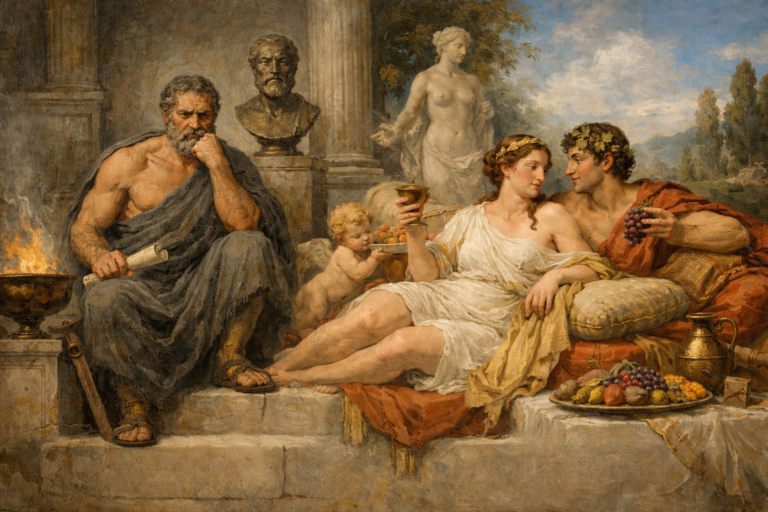
I have considered Stoicism and Epicureanism as responses to two different forms of working life. Stoicism seemed especially well suited to the perspective of the office or factory worker: the person who works inside a company, school, government agency, nonprofit, hospital, or other institution whose purposes and structures were created by others. The employee benefits from a philosophy of agency within limits, and Stoicism offers one.
Epicureanism, in contrast, seemed especially relevant to the perspective of the founder or entrepreneur. The founder has greater freedom to choose the purposes, pace, scale, and the shape of work, and therefore needs not only courage and endurance but also what I have called “a theory of enough.” And we can see that Epicurus offers one.
Yet this contrast leaves a harder question unresolved: What is it that really makes any work worth doing?
It is one thing to ask how we should respond to difficult labor. It is another to ask whether the labor itself contributes to a good life. A person may endure work bravely, free himself from status anxiety, remain emotionally composed, and even come to enjoy the task. But none of this, by itself, tells us whether the work itself is worthy.
We must ask more:
- Does the work cultivate excellence?
- Does it serve a genuine human purpose?
- Does it produce something worthy of the time and intelligence invested in it?
- Does it belong within a flourishing life, or merely fill one?
These are not merely psychological questions. They are really questions about value and so they are really philosophical questions.
To answer these questions, I think we need two philosophers who do not usually appear in the same conversation: Albert Camus and Aristotle.
Camus gives us a perspective build around one of the modern world’s most powerful images of repetitive and apparently futile labor: Sisyphus pushing his stone toward the summit, only to watch it roll down again.
Aristotle gives us one of philosophy’s richest accounts of flourishing: the idea that a good life consists not merely in feeling satisfied, but in sustained activity that expresses excellence and is directed toward genuine goods.
Between them lies a central problem of modern work: Can we make work meaningful simply by changing the way we inhabit it, or must meaningful work possess some objective relation to human flourishing?
The Employee and the Stone
The story of Sisyphus feels surprisingly contemporary because so much modern work is repetitive: Reports are written, reviewed, revised, filed, and eventually replaced by new reports. Meetings produce action items that generate more meetings. Policies are developed, implemented, evaluated, renamed, reorganized, and abandoned. Metrics are improved even when no one can say with confidence what human good the metric advances.
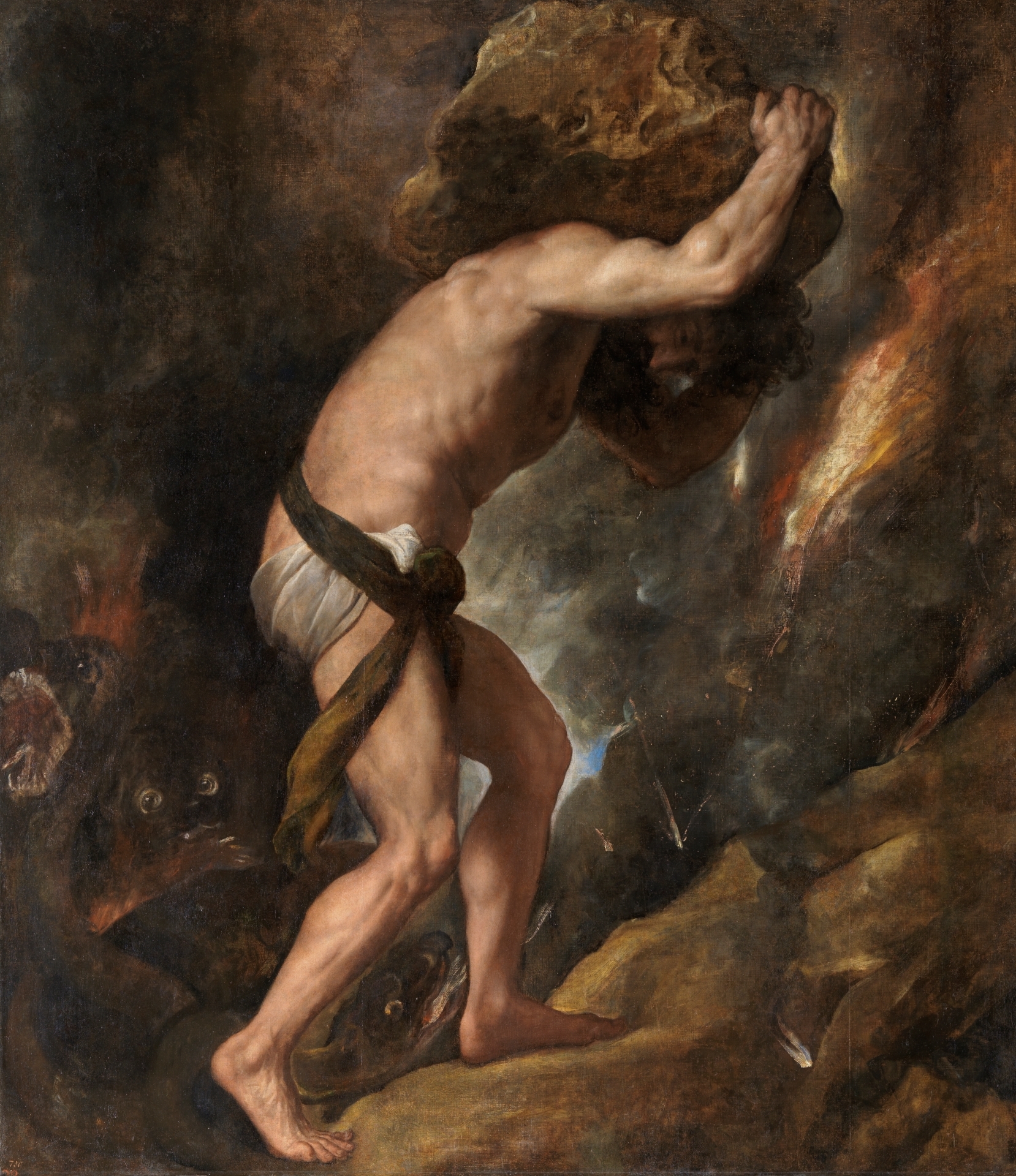
The work is rarely literally useless. But it can feel cyclic rather than cumulative. The worker does not arrive at a summit and remain there. The quarter ends, the year resets, the budget begins again, the inbox refills, and the new target replaces the old one.
This is especially true inside large institutions. The employee often does not choose the stone, the hill, or the reason the stone must be moved. He inherits those reasons from others. The institution supplies the job description, defines success, establishes the hierarchy, and provides the approved language and metrics through which the work must be understood.
The employee is therefore not simply laboring. He is laboring inside a preexisting accounting of what the labor means.
This makes his position in some ways more troubling than that of Camus’s Sisyphus. Sisyphus, as we are led to understand, knows that the gods have condemned him to a task without completion.
The modern worker may be less certain. The task may be praised as important, strategic, transformative, mission-driven, innovative, or essential, while the worker quietly suspects that the activity has become detached from a larger justified purpose it supposedly serves.
In this way the problem is not always that the work inherently lacks meaning. Sometimes the problem is that the institution supplies a meaning that is false.
Camus and the Refusal of Consolation
Camus begins with the absurd. The absurd is not simply the claim that nothing matters, nor is it a property of the universe considered in itself. The absurd arises from a confrontation between the human drive to find meaning and purpose and the world’s objective failure to provide it.
Specifically, Camus reaffirms that human beings long for:
- Intelligibility
- Unity
- Completion
- Justice
- Significance
- Some assurance that effort belongs within a meaningful whole.
We want suffering to be justified, action to culminate in meaningful outcomes, and life to answer the questions we ask of it with some degree of intelligibility.
The world, however, does not provide such assurances when we ask it. The absurd emerges from the tension between the human demand for meaning and the corresponding silence of an indifferent world.
Faced with this, Camus refuses two apparent escapes. The first is despair: the conclusion that because the world offers no final justification, life is not worth living.
The second is consolation: the invention (or projection) of a transcendent and infinite order that resolves the contradiction by purporting to supply a meaning we cannot actually establish.
Camus wants to preserve both lucidity and life. Sisyphus therefore becomes his hero.
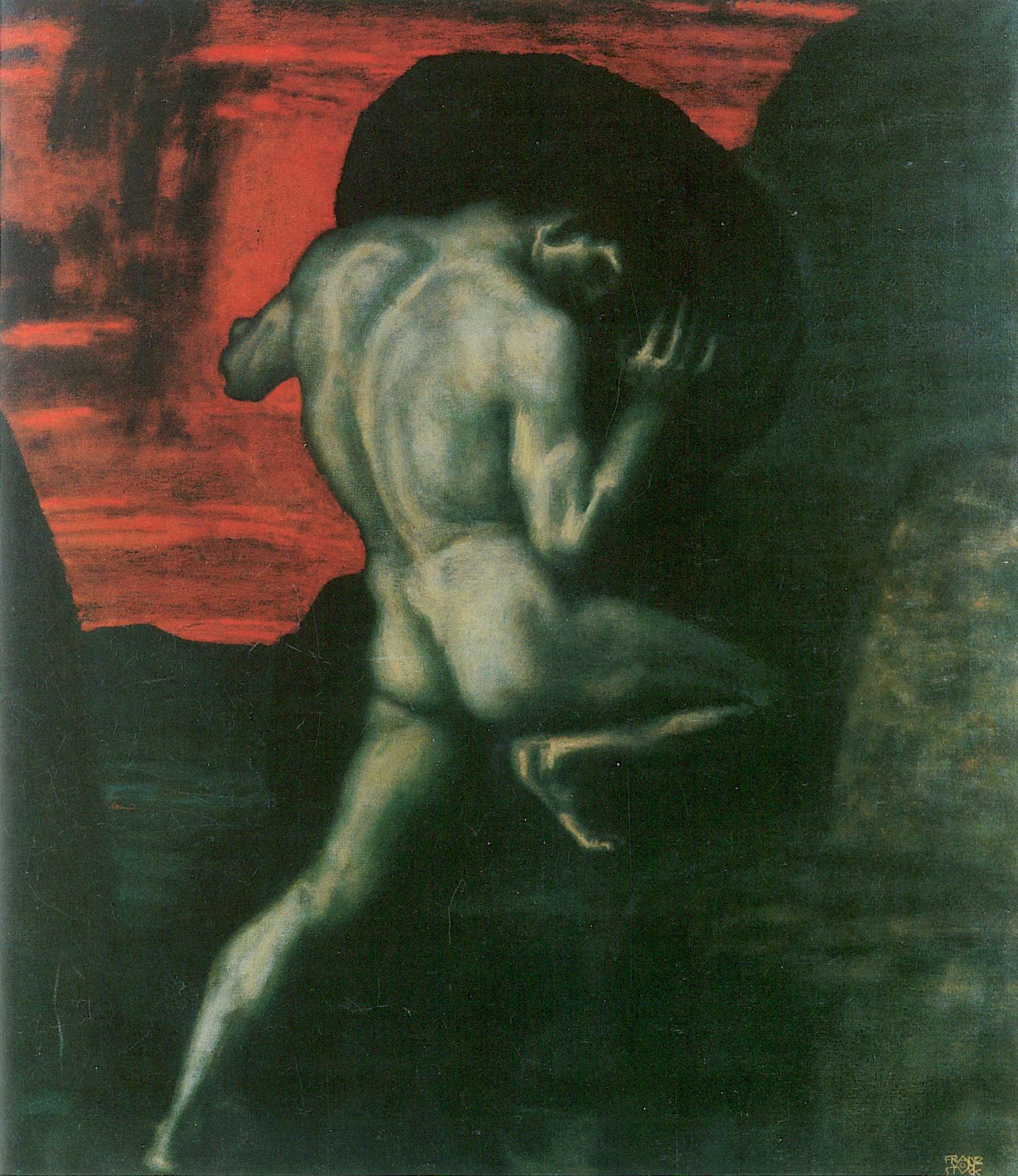
The gods have condemned Sisyphus to repeat a task that can never be completed. He pushes the rock upward, watches it fall, descends, and begins again. In this endless act, there is no final achievement, no accumulation, no progress, and no promise that the labor will eventually be redeemed.
Yet Camus asks us to imagine Sisyphus happy.
This is not because Sisyphus comes to believe that the task is secretly useful. It is not because the gods will eventually reward him or because he knows that perhaps the stone will one day remain at the summit. And it is not because he able to forget the futility of his labor. Camus asks us to imagine him happy, even though Sisyphus knows exactly what his condition is.
Sisyphus’s victory consists in his lucid possession of his fate. The gods control the punishment, but not the consciousness with which he understands it. They can condemn him to the stone, the hill, and the endless repetition, but they cannot force him to mistake the task for something other than it is, nor can they compel him to add despair to the labor. His freedom does not lie in escaping the mountain or discovering a hidden purpose in the punishment. It lies in refusing illusion, refusing surrender, and making even this condemned life his own.
This initially sounds close to Stoicism. Both philosophies preserve a form of freedom under conditions that cannot be changed by circumstances. But the difference is decisive. It is that the Stoic believes that the individual, through reason and self-control, can bring himself into harmony with an objectively rational moral order. But Camus denies that such an order is ever available to us; in fact, he denies that it even exists.
Stoic endurance remains intelligible within a meaningful cosmos. The Stoic suffers, but not in a universe wholly silent to reason. Camusian revolt begins where that assurance disappears. To imagine Sisyphus happy is not to imagine him consoled, distracted, or deceived. It is to imagine a happiness that survives without hope of rescue, without expectation that the stone will stay at the summit, and without faith that the universe will finally explain itself. His happiness is not the denial of absurdity, but its lucid defiance.
Does Sisyphus Defeat Futility?
The image nevertheless presents a difficulty, though we have to state it carefully.
Camus does not claim that Sisyphus’s labor becomes objectively meaningful in the ordinary sense. That would misunderstand the point. The stone still falls. The task still has no completion. Nothing is built that remains at the summit. The universe offers no final justification that would transform his punishment into a kind of achievement.
For Camus, this is precisely the condition under which the revolt becomes possible.
Sisyphus’s victory is not that he discovers a hidden purpose inside the labor. His victory is that he refuses both illusion and defeat. He sees the futility clearly and nevertheless claims his consciousness as his own. The gods may control the task, but they do not fully control the meaning of Sisyphus’s inward relation to it.
So the question is not whether Camus has made the activity objectively meaningful. He does not need to do that, and on his own terms he should not try. Absurdity is the true human condition. The better question is whether this transformation of consciousness is enough when we turn from myth to work.
In human labor, especially inside companies, schools, nonprofits, agencies, and other institutions, activities are not only endured or interpreted. They also do things. They produce effects. They form habits. They shape relationships. They serve or fail to serve human goods. They may build, maintain, educate, heal, protect, deceive, exploit, distract, or waste.
A person’s lucid relation to the work matters deeply. It is no small thing to refuse self-deception. But lucidity may not exhaust everything worth asking about the work.
This is also why the modern workplace can misuse a Camusian lesson. Organizations often encourage employees to solve structural problems psychologically as opposed to existentially:
- The work is repetitive, so the employee is told to bring a better attitude.
- The process is irrational, so the employee is encouraged to practice resilience.
- The objective is incoherent, so the worker is asked to reconnect with the mission.
- The institution is harmful, so employees are offered wellness programs.
There is wisdom in cultivating a healthy response to unavoidable difficulty. But there is also danger in treating every problem of institutional design as a problem of individual consciousness.
Sometimes the stone should not be pushed more mindfully. Sometimes the hill should be redesigned. Sometimes the work should stop.
Camus helps us see how a person might refuse spiritual defeat in the face of repetition, incompletion, and absurdity. But the world of work requires another question as well: We have to ask not only whether we can inhabit labor lucidly, but whether the labor itself participates in a worthwhile human life.
Local Authorship
Still, Camus offers something important to the employee.
A person may not possess global authorship over an institution, but may recover local authorship within it. The employee may not choose the whole structure, set the mission, design the policies, or determine the organization’s final purposes. Yet he may still exercise authorship over the manner in which his part of the work is done.
A teacher may not control the educational system, but can give real attention to the student sitting before her. A nurse may work inside an alienating hospital bureaucracy, yet preserve dignity in a particular act of care. A civil servant may administer an imperfect process while ensuring that one person is treated fairly. A manager may be unable to repair the whole organization but can create a pocket of trust within a department.
The employee cannot honestly say, “This entire structure is mine.” But he may be able to say:
The institution does not fully determine the quality of attention, care, honesty, and competence I bring to the part of the world entrusted to me.
This is a form of revolt. It is not the fantasy that the institution is better than it is. It is the refusal to let the institution’s limitations completely determine one’s conduct. The worker recovers a degree of authorship over the manner in which the role is performed.
That can be noble. And it can also become a trap.
Local virtue does not automatically redeem a harmful whole. A person can act conscientiously inside a system that should not exist. He can perform skillfully a task that produces no genuine good. He can create islands of dignity inside an organization whose larger purposes remain corrupt.
This does not make local authorship meaningless. On the contrary, it may be the most important form of freedom available to many workers. But it means that local authorship is not the end of the inquiry.
“I take pride in doing my job well” is therefore a powerful statement, but not a complete moral defense. We must still ask: What is the job doing? What goods does it serve? What habits does it form? What kind of life does it support or obstruct?
Camus helps us understand how work can be inhabited without illusion. But we still need a standard for judging whether the work is worthy of being inhabited in that way.
Aristotle and the Object of Activity
This is where Aristotle becomes indispensable.
Aristotle does not define happiness primarily as a feeling. Nor does he identify it with inner peace, subjective satisfaction, or heroic defiance. Happiness, or eudaimonia, is better understood as flourishing: living and acting well over the course of a complete life.
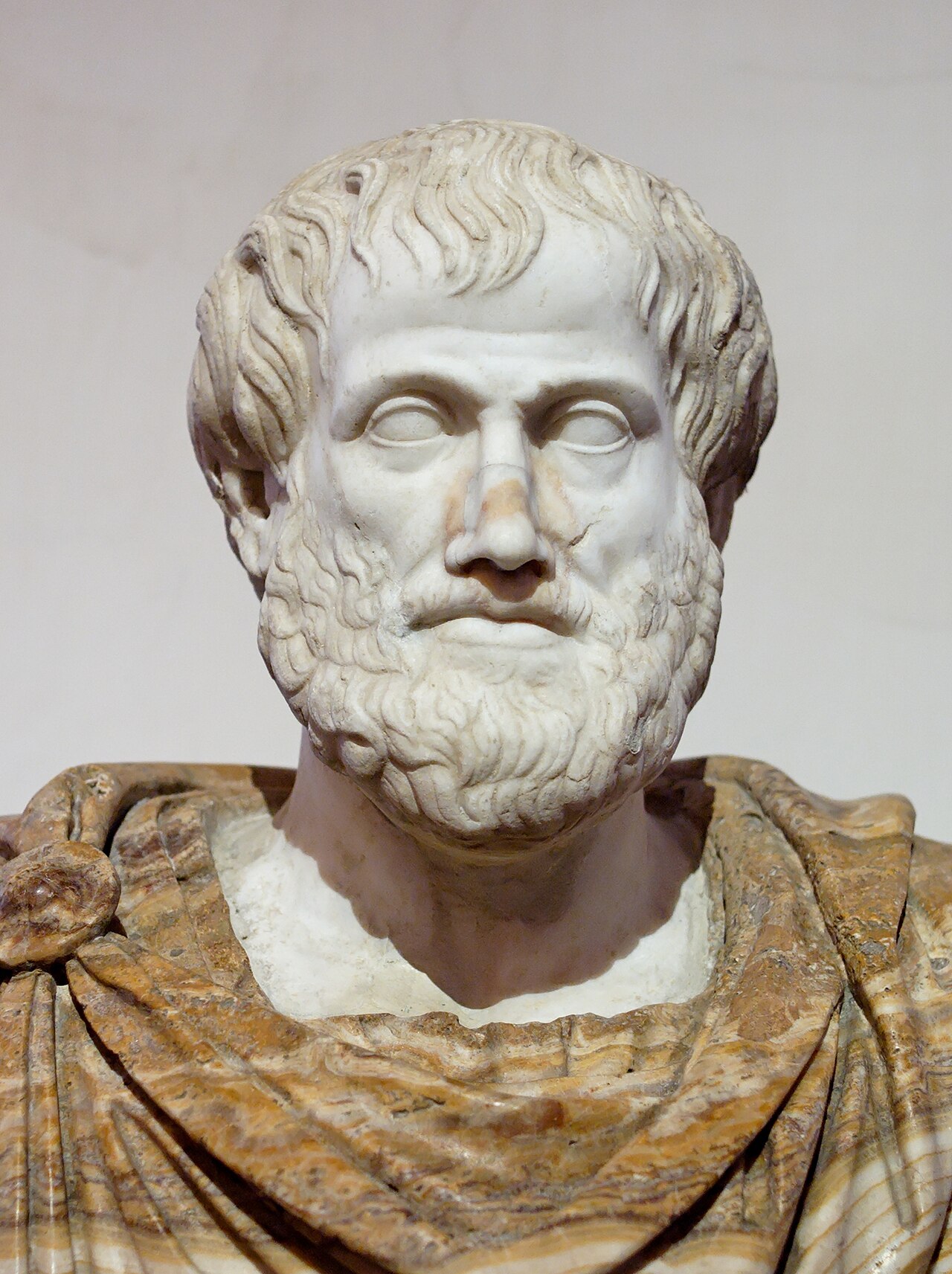
Flourishing is an activity, not merely a state of mind. To flourish is to exercise human capacities excellently in relation to worthwhile objects, within a robustly-developed and multifaceted life.
This account is more demanding than the claim that a person feels content. Someone may feel satisfied because his desires have been manipulated, narrowed, or corrupted. He may enjoy trivial pursuits, take pride in vicious activity, or identify completely with an unworthy role. These facts demonstrate that subjective affirmation cannot be the final standard.
Aristotle asks not merely whether the person embraces the activity, but whether the activity is an excellent exercise of power directed toward worthwhile outcomes.
This gives us a more substantial way of evaluating work:
- What capacities does the activity exercise?
- What habits does it form?
- What goods does it produce?
- What relationships does it create?
- Does it require judgment?
- Does it permit excellence?
- What kind of person does the worker become through repeated participation?
- How does the work fit within the whole of a human life?
These questions expose the limitations of purely psychological accounts of meaning. A person may feel purposeful while becoming objectively worse. A worker may be highly engaged in an activity that rewards dishonesty, vanity, cruelty, cowardice, or thoughtlessness. An institution may cultivate dedication while directing that dedication toward empty or destructive ends.
Aristotle forces us to examine not only the intensity of commitment, but the worthiness of its object.
Practical Wisdom and the Particular Case
Aristotle does not solve the problem by handing us a simple list of good and bad occupations. His account depends upon the cultivation of practical wisdom, or phronesis.
Practical wisdom is the cultivated capacity to deliberate well about action in light of the human good. It is not the mechanical application of rules, nor mere cleverness about means. It requires seeing the situation rightly, desiring the right ends, and choosing fittingly among the available possibilities. The practically wise person does not simply calculate what works; he perceives what matters and acts in a way that belongs to a flourishing life.
This matters because the same outward behavior that a person might undertake can express very different qualities:
- Remaining in a difficult job may be courageous, prudent, loyal, fearful, complacent, or financially necessary.
- Leaving may be liberating, irresponsible, wise, impulsive, or morally required.
- Endurance may express strength, or it may reveal dependency.
- Ambition may be admirable when directed toward excellent work, or vain when directed toward status alone.
- Contentment may reflect wisdom, or it may rationalize a refusal to develop one’s capacities.
No philosophical slogan can eliminate the need for judgment. “Control what you can.” “Withdraw from empty desire.” “Imagine Sisyphus happy.” Each contains wisdom, but none can decide the particular case for us.
This is also where the distinction between the perspective of the employee and that of the founder becomes especially revealing.
The Employee and the Counterfeit Virtues
Institutions do not merely direct behavior. They interpret it. They tell employees which qualities count as virtues.
Organizations genuinely need reliability, cooperation, courage, accountability, skill, and judgment. But they also have a tendency to reward counterfeit versions of these qualities:
- Compliance presented as loyalty
- Silence presented as professionalism
- Aggression presented as decisiveness
- Caution presented as prudence
- Self-promotion presented as leadership
- Protection of senior management presented as strategic judgment
- Extraction of more labor from exhausted employees presented as accountability
- Institutional survival presented as stewardship
The language of virtue is powerful because people want to see themselves as on the side of good. An institution rarely needs to say, “We would like you to become less honest.” It can say, “We need you to become more aligned.”
It does not say, “Ignore what you know to be true.” It says, “Stay solutions-focused.”
It does not say, “Protect power.” It says, “Understand the organizational context.”
This is one of bureaucracy’s deepest moral dangers: It can make institutional usefulness appear morally admirable.
The employee therefore needs practical wisdom at two levels. First, he must judge how to perform the role well. Second, he must judge whether the institution’s definition of good performance is itself sound.
The second judgment is harder because institutions distribute rewards partly by controlling interpretation. The employee is not merely told what to do. He is told what the doing means and is rewarded for compliance.
Role Morality and Divided Responsibility
Institutional work also encourages a division between personal and professional judgment. A person says, “Personally, I disagree, but professionally, this is my role.”
Sometimes this is appropriate. Roles create legitimate obligations. Judges should not decide cases according to personal preference. Teachers should not grade students on whim. Managers must sometimes make decisions that disappoint people. Civil servants must administer laws they did not write.
Social cooperation would be impossible if every role were reduced to private inclination.
But role morality becomes dangerous when the role is treated as an independent moral agent. “I was only doing my job” allows responsibility to disappear upward through the hierarchy. The employee is punished for disobedience but excused from judgment.
The organization demands agency when it wants results and denies agency when responsibility becomes inconvenient.
A defensible philosophy of institutional work must therefore preserve two truths:
- Roles create real duties.
- Roles never exhaust moral responsibility.
The employee did not author the whole institution. But he still authors his participation in it.
The Founder’s Side of the Problem
The entrepreneur confronts these questions from the opposite direction: The founder is not only trying to find meaning in work. The founder is helping create the conditions under which other people will seek meaning.
A company is not merely an economic mechanism. It is an institution and therefore it is a moral environment. It teaches people what to value, rewards certain habits, shapes relationships, and determines which forms of speech are safe, which truths are welcome, and which qualities lead to advancement.
The entrepreneur therefore bears responsibility not only for what the company sells and how it sells it, but for what kind of people the company encourages its staff members to become.
A founder should ask:
- Does the organization reward truth or agreeable reporting?
- Does it cultivate judgment or obedience?
- Does it create useful work or ceremonial activity?
- Can employees connect their effort to a visible good?
- Are people treated as participants in a shared project or as replaceable instruments?
- Does the company manufacture anxiety to extract effort?
- Does it attach status to trivial distinctions?
- Does it encourage workers to confuse institutional success with personal worth?
In this way, the founder is designing the hill and choosing the stones.
This does not mean every task must be inspiring. Real organizations contain repetition, maintenance, administration, and necessary drudgery. A business cannot be organized as a permanent experience of self-actualization.

Automat (1927)
But there is a moral difference between work that is tedious because useful things require maintenance and work that is tedious because the institution has lost contact with its own purpose.
Inventory must be counted repeatedly because inventory changes and because accuracy matters. Medical records must be maintained because care requires continuity and the protection of privacy. Accounts must be reconciled because ongoing trust depends upon demonstrated accuracy and ethical stewardship. These tasks recur, but their repetition serves a continuing good.
The more troubling case is work that continues because the institution cannot admit it is unnecessary: a report no one uses, a meeting no one needs, a metric no one understands, or a process preserved because abandoning it would threaten the authority of those who created it.
The founder or leader has a special duty to distinguish the recurring from the pointless.
Camus and Aristotle in Tension
We can now see the tension between Camus and Aristotle more clearly.
Camus asks whether a person can live lucidly and freely even when no final justification is available. Aristotle asks whether the activity itself belongs within a genuinely flourishing human life.
Camus’ perspective is strongest when the world refuses to provide the objective meaning that human nature demands. Aristotle’s perspective is strongest when we must choose among competing forms of life and judge their worth. Camus warns us against false consolation. Aristotle warns us against the danger of subjective affirmation of unworthy ends.
The two perspectives correct one another.
Without Camus, Aristotle’s account of flourishing may seem too orderly. Real life contains loss, repetition, failure, incompletion, and circumstances in which the good cannot be fully achieved. People still need a way to live without capitulation in the face of such things. This is a kind of freedom.
Without Aristotle, Camusian revolt may become too thin. A person might heroically affirm an activity that forms him badly, harms others, or serves no worthwhile purpose. Lucidity in this context is necessary. It is not sufficient.
Four Questions About Work
Four serious thinkers now offer four distinct tests.
- The Stoic asks: What remains genuinely within my agency?
- The Epicurean asks: Which desires and rewards have I mistakenly allowed to become conditions of my happiness?
- Camus asks: Can I inhabit this work lucidly, without lying to myself about what it means?
- Aristotle asks: Does this activity express excellence, form character well, and contribute to genuine human flourishing?
For the employee, these questions can determine how a role should be inhabited, resisted, reinterpreted, or left.
For the founder, they create an even more demanding responsibility. The founder has the opportunity to build an organization in which employees do not require Camus’ philosophical heroism merely to preserve their humanity.
Work That Survives Honest Description
Perhaps the most useful practical test is also the simplest: Can the work survive honest description?
Strip away the organizational language. Remove the slogans, mission statements, strategic terminology, and promotional vocabulary. Then ask:
- What is actually happening?
- What is being made?
- Who is being helped?
- What capacities are being exercised?
- What habits are being formed?
- What costs are being imposed?
- What would be lost if this activity stopped?
An institution whose work remains valuable under plain description has a strong claim on the loyalty of those who participate in it. An institution whose value disappears when the euphemisms are removed has a deeper problem than employee morale.
The worker may still choose to remain for legitimate reasons: family obligations, financial necessity, health insurance, lack of alternatives, loyalty to colleagues, or the possibility of reform. Practical wisdom does not demand theatrical gestures.
But lucidity matters. A person should know which part of the good is real, which part is compromised, and which part is merely institutional storytelling.
Beyond Endurance
Modern discussions of work place too much weight on resilience and the modern turn towards Stoicism encourages it even more. Resilience matters. People need the ability to withstand disappointment, uncertainty, repetition, criticism, and failure. But resilience can also become a way of adapting people to conditions that should be changed.

New York Movie (1939)
A worker who can endure anything is not necessarily free. An entrepreneur who can demand anything is not necessarily building value.
The question is not merely whether we can carry the stone. It is whether the stone should be carried, whether the hill serves a purpose, whether the labor forms us well, and whether the summit is connected to a genuine good.
Stoicism teaches us not to be destroyed by what lies beyond our control. Epicureanism teaches us not to multiply desires endlessly in a way that makes freedom impossible. Camus teaches us not to lie to ourselves or others about the silence, repetition, and incompletion that remain. Aristotle teaches us that a good life requires more than endurance, tranquility, or defiance. It requires activity worthy of a human being.
And here the burden shifts decisively toward the entrepreneur.
The office or factory worker inherits a world of work and must decide how honorably to inhabit it. The founder creates a world of work that others will be asked to inhabit.
That is a greater freedom, but also a greater moral hazard.
The entrepreneur decides which ambitions become institutional imperatives, which anxieties get passed downward, which forms of striving are praised, and whether growth remains a means or becomes the end. A company can enlarge freedom for the founder and those who work within it, or it can give one person’s restless desire an organizational form.
The decisive question is therefore no longer merely whether the founder can endure the burdens of building a company.
It is whether the founder knows what the company is for, what kind of life it should make possible for themselves and others, and when the work has reached the point at which more is no longer better.
That question belongs above all to Epicurus.
And so next we will turn from the problem of enduring work to the problem of governing desire—from Sisyphus and the stone to the entrepreneur and the enterprise. The central danger will no longer be meaninglessness imposed from outside, but endless striving generated from within.
The entrepreneur’s most difficult task may not be learning how to persist.
It may be learning when enough is enough.