
Beyond Shareholders and Stakeholders: A Phronetic Fiduciary Theory of Managerial Responsibility
The familiar debate between shareholder theory and stakeholder theory is usually framed as a dispute about whose interests corporate managers ought to advance. Shareholder theorists give priority to the economic interests of the corporation’s owners, while stakeholder theorists argue that managers must consider a wider range of constituencies, including employees, customers, suppliers, creditors, and communities. Both positions identify genuine features of managerial responsibility, but each becomes vulnerable when it tries to turn its central insight into a complete theory.
Shareholder theory offers an unusually clear account of managerial authority, but it risks making morality too thin if managers are required only to pursue shareholder returns within the boundaries of law. Stakeholder theory recognizes the moral claims of persons affected by corporate activity, but it risks making managerial authority too indeterminate if executives are authorized to balance competing interests according to their own judgments about social welfare. The central mistake may therefore be the assumption shared by both sides that managerial ethics is fundamentally a question about whose interests ought to be maximized.
A better theory begins elsewhere. Corporate management is a form of entrusted agency exercised within a moral community, and managerial responsibility therefore has at least three dimensions. Managers have a role-derived fiduciary purpose, they remain subject to moral duties toward persons that extend beyond legal compliance, and they require practical wisdom to determine what those purposes and duties demand in particular circumstances.
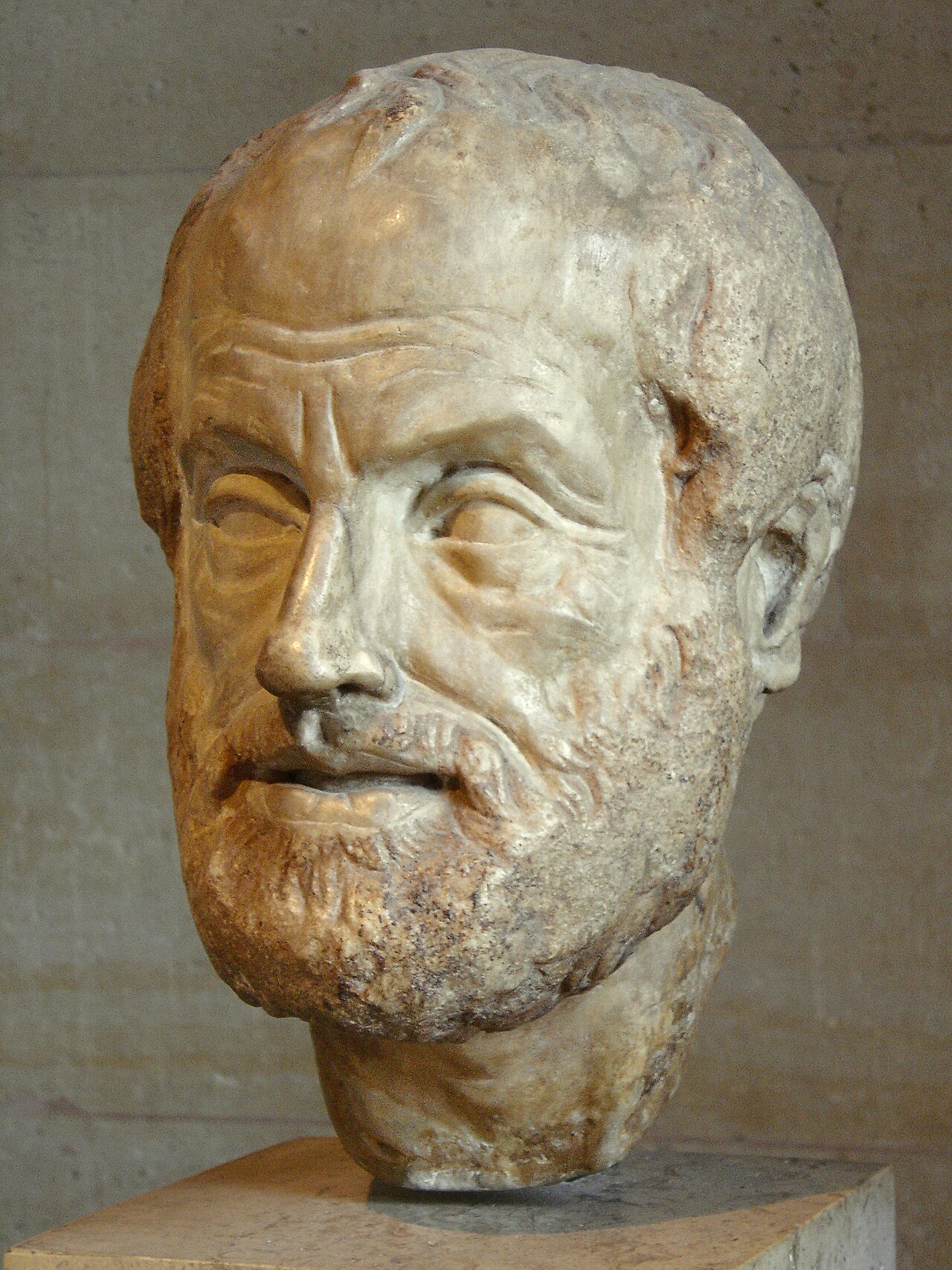
The resulting theory can be called phronetic fiduciary theory. It is fiduciary because managers exercise delegated authority over resources entrusted for corporate purposes, and it is phronetic because the proper exercise of that authority requires the Aristotelian virtue of practical wisdom. Kant supplies the moral constraints that protect the agency of shareholders and nonshareholders alike, while Aristotle explains how morally serious managers can act where rules, contracts, and general principles fail to determine a unique answer.
I. The strongest argument for shareholder theory
The strongest version of shareholder theory does not begin with the proposition that profit is the highest good. It begins with the nature of agency and entrusted authority. Managers exercise control over resources that are not simply theirs to dispose of according to whatever purposes they personally regard as valuable.
The argument can be expressed formally:
The Fiduciary Argument
- Anyone who voluntarily accepts delegated authority over another’s resources for an authorized purpose acquires a presumptive duty to exercise that authority in pursuit of the authorized purpose.
- Corporate managers voluntarily accept delegated authority over corporate resources for authorized corporate purposes that ordinarily include the creation of economic returns for investors.
- Therefore, corporate managers acquire a presumptive duty to exercise corporate authority in pursuit of those authorized corporate purposes, including the creation of economic returns for investors.
The argument is valid. If the two premises are accepted, the conclusion follows because corporate managers instantiate the class described in the first premise. The important philosophical dispute therefore concerns the content and limits of the premises, not the inference itself.
This reconstruction captures the strongest element of Milton Friedman’s position. A manager who redirects entrusted corporate resources toward an independently chosen social objective does more than reduce shareholder returns. The manager assumes authority to determine both which social ends ought to be pursued and whose resources will finance them.
What is shareholder theory?
Shareholder theory holds that corporate managers have a primary fiduciary responsibility to pursue the legitimate economic interests of shareholders within the constraints imposed by law and morality.
The objection becomes especially powerful when the social objective is one that shareholders could pursue themselves with resources distributed to them. Shareholders remain moral agents capable of supporting environmental, charitable, religious, cultural, or political causes according to their own judgments. A manager who appropriates their resources for such purposes risks converting an entrusted office into an instrument of personal moral authorship.

This explains the anti-paternalistic force of Friedman’s argument. Corporate office does not make the manager a social sovereign, and managerial expertise does not establish a general right to decide which public purposes deserve other people’s resources. Shareholder theory therefore imposes a valuable limit on managerial discretion even if one ultimately rejects Friedman’s broader doctrine.
II. The strongest argument for stakeholder theory
Stakeholder theory begins from an equally important observation: corporations act upon persons who are not shareholders. Employees, customers, suppliers, creditors, and communities can be harmed, deceived, exploited, endangered, or treated unfairly by profitable corporate conduct. Their moral significance does not depend upon whether they own equity in the firm.
The strongest stakeholder argument can therefore be formulated without assuming that managers must maximize stakeholder welfare:
The Moral Standing Argument
- If corporate conduct significantly affects persons, those persons retain whatever moral claims they possess as persons against those who act upon them.
- Corporate conduct significantly affects employees, customers, suppliers, creditors, communities, investors, and others.
- Therefore, employees, customers, suppliers, creditors, communities, investors, and others retain moral claims against corporate managers when managerial conduct affects them.
This argument is also valid. Nothing in the conclusion yet establishes that every stakeholder has an equal claim on corporate resources or that managers must maximize a weighted sum of stakeholder interests. It establishes only the more fundamental proposition that managerial responsibility cannot make the moral standing of nonshareholders disappear.
What is stakeholder theory?
Stakeholder theory holds that corporate managers must recognize the legitimate interests or claims of parties affected by corporate conduct, including employees, customers, suppliers, communities, and shareholders.
This point becomes particularly important when shareholder theory is reduced to the instruction to maximize profit while obeying the law. Law is necessarily incomplete because legislation, regulation, enforcement, and adjudication cannot anticipate every morally significant circumstance. Conduct can therefore be lawful while remaining deceptive, exploitative, reckless, dishonorable, or unjust.
The stakeholder theorist is consequently right to reject the claim that legality exhausts managerial morality. A corporate role may create special obligations, but it cannot repeal general moral duties. The fact that an action increases shareholder wealth cannot by itself establish that the action is morally permissible.
III. The central weakness of the shareholder–stakeholder framework
The difficulty is that stakeholder theory often makes an unwarranted transition from moral standing to managerial entitlement. From the fact that employees, customers, suppliers, and communities possess legitimate moral claims, it does not follow that managers have been authorized to maximize their welfare or redistribute corporate resources among them. A right not to be deceived is not the same thing as a right to have one’s welfare maximized by corporate management.
The distinction can be stated formally:
The Anti-Balancing Argument
- If recognizing a person’s moral standing does not by itself establish that managers are authorized to maximize that person’s interests, then the existence of stakeholder moral claims does not by itself justify a general managerial mandate to balance or maximize stakeholder welfare.
- Recognizing a person’s moral standing does not by itself establish that managers are authorized to maximize that person’s interests.
- Therefore, the existence of stakeholder moral claims does not by itself justify a general managerial mandate to balance or maximize stakeholder welfare.
The significance of this argument is that it separates two questions that stakeholder theory sometimes collapses. One question concerns what managers may permissibly do to persons, while the other concerns whose purposes managers are authorized to advance with corporate resources. A coherent theory of managerial responsibility must answer both questions without assuming that the answer to one automatically answers the other.
The same distinction reveals the weakness of an excessively narrow shareholder theory. The fact that managers have special obligations toward shareholders does not entail that those obligations override every moral duty owed to other persons. Special obligations are real without being morally absolute.
The dispute should therefore no longer be framed as shareholders versus stakeholders. The better question is how entrusted managerial purposes relate to general moral constraints and how managers should act when neither institutional purpose nor moral principle uniquely determines the proper response. That reformulation creates room for both Kant and Aristotle.
IV. Kantian agency and the limits of managerial authority
Kant’s Formula of Humanity provides a compelling explanation of why the fiduciary element of shareholder theory matters. Persons ought always to be treated as ends and never merely as means, which requires respect for their capacity to choose and pursue purposes of their own. When shareholders entrust resources to managers for specified corporate purposes, their agency remains morally significant even after control over those resources has been delegated.
The Kantian version of the fiduciary argument can be stated as follows:
The Shareholder Agency Argument
- It is morally impermissible to use another rational agent merely as a means to an end that the agent has not authorized.
- When a manager knowingly diverts entrusted corporate resources from authorized corporate purposes toward the manager’s independently chosen social end, the manager uses the shareholders’ delegated agency as a means to that unauthorized end.
- Therefore, when a manager knowingly diverts entrusted corporate resources toward an independently chosen social end outside authorized corporate purposes, the manager acts impermissibly.
This gives the Friedmanian objection a moral foundation deeper than ownership alone. The objection is not merely that shareholders have a property claim, but that managers should not substitute their chosen ends for the ends of persons whose agency makes managerial authority possible. The manager who treats corporate resources as an opportunity for personal social policy risks instrumentalizing shareholders.
Yet the Kantian principle is symmetrical. If managers may not use shareholders merely as means to independently chosen social objectives, managers may not use employees, customers, suppliers, creditors, or other persons merely as means to shareholder enrichment. The principle that protects shareholder agency simultaneously limits the ways in which shareholder interests may permissibly be pursued.
What is the Friedman Doctrine?
The Friedman Doctrine is the view associated with Milton Friedman that corporate executives, as agents of the owners of a business, should generally pursue shareholder economic interests rather than use corporate resources to advance independently chosen social objectives.
The corresponding argument is equally straightforward:
The Universal Constraint Argument
- No person may permissibly be treated merely as a means to another person’s ends.
- Employees, customers, suppliers, creditors, shareholders, and other affected parties are persons.
- Therefore, none of these parties may permissibly be treated merely as a means to the ends of another party.
The conclusion has an important consequence for shareholder theory. Shareholder authorization creates genuine managerial responsibilities, but it cannot authorize deception, coercion, exploitation, bad faith, or other violations of duties owed to third parties. Fiduciary duty is therefore morally bounded rather than morally supreme.
V. Why morality cannot be reduced to legal compliance
A committed Friedman defender may concede that morality matters while arguing that managers should ordinarily rely on law because extra-legal moral judgments are controversial. Questions concerning fairness, exploitation, environmental responsibility, distributive justice, and social obligation often generate rational disagreement. Allowing managers to act on contested moral principles might therefore recreate the very managerial discretion that shareholder theory seeks to control.
The concern is legitimate, but the inference from disagreement to legal minimalism does not follow. Some moral cases are difficult, but the existence of difficult cases does not establish that all morally relevant cases are difficult. Nor does uncertainty at the margins erase clear cases near the center.
The point can be expressed deductively:
The Argument Against Legal Exhaustion
- If some moral duties are sufficiently determinate even when they exceed legal requirements, then the existence of morally difficult cases cannot justify treating law as the exhaustive standard of managerial conduct.
- Some moral duties are sufficiently determinate even when they exceed legal requirements.
- Therefore, the existence of morally difficult cases cannot justify treating law as the exhaustive standard of managerial conduct.
The second premise is difficult to deny without embracing an implausible form of legal positivism about morality. Deliberate deception, knowing concealment of serious danger, bad-faith manipulation, and intentional exploitation of profound vulnerability can be wrong even where law has not clearly prohibited them. The possibility of disagreement about borderline cases does not make those clearer cases morally indeterminate.
Other professions already recognize this structure. Physicians, lawyers, researchers, judges, and teachers encounter ethical responsibilities that exceed formal legal requirements while also confronting genuine hard cases. Management has no obvious reason to be uniquely exempt from the need for moral judgment.
The correct response to moral difficulty is therefore not to eliminate moral judgment but to improve it. Once that point is accepted, however, Kantian principles alone are not enough. General moral rules can constrain conduct while still leaving open what those constraints require in the particulars of a complicated managerial situation.
VI. Aristotle and the problem of application
Aristotle begins from the recognition that practical life cannot be governed entirely through precise universal rules. Ethical principles remain important, but the circumstances in which human beings act possess a degree of variability and particularity that no general formulation can fully anticipate. Good action therefore requires more than possession of correct principles.
The relevant virtue is phronēsis, or practical wisdom. Phronēsis is not mere cleverness, technical intelligence, intuition, or accumulated experience. It is the cultivated capacity to perceive what is morally salient in a concrete situation, deliberate well about competing considerations, and choose a fitting course of action for the right reasons.
The Aristotelian argument for practical wisdom can be formulated as follows:
The Underdetermination Argument
- Whenever correct general principles fail to determine a unique proper action in a particular situation, sound action requires a capacity for reasoned judgment about particulars.
- Correct general principles frequently fail to determine a unique proper action in complex managerial situations.
- Therefore, sound managerial action frequently requires a capacity for reasoned judgment about particulars.
A further Aristotelian premise identifies that capacity:
- Phronēsis is the virtue by which a person reasons well about what ought to be done in particular practical situations.
- Therefore, sound managerial action in such situations requires phronēsis.
The argument does not claim that principles are dispensable. It claims that principles must be intelligently applied, and application cannot always be reduced to another rule without generating an infinite regress of rules for interpreting rules. At some point a well-formed practical reasoner must perceive what kind of case is actually before her.
Consider a longstanding employee whose serious mistake has imposed substantial costs on the firm. Principles of fairness, shareholder responsibility, proportionality, honesty, loyalty, and accountability may all be relevant, yet none independently determines whether the proper response is dismissal, demotion, warning, retraining, restitution, or forgiveness. Practical wisdom concerns the manager’s ability to see which facts matter, what weight they properly carry, and what response fits the whole situation.
What is phronēsis?
Phronēsis is Aristotle’s concept of practical wisdom: the cultivated ability to perceive what matters in a particular situation and deliberate well about what ought to be done.
VII. Character and managerial perception
Aristotle contributes more than a device for resolving hard cases because practical wisdom is inseparable from character. A person’s dispositions shape what she notices, how she describes circumstances, which considerations she treats as significant, and which rationalizations appear attractive. Managerial judgment can therefore fail before explicit deliberation even begins.
A greedy manager may interpret nearly every ambiguity in favor of immediate financial gain. A vain manager may interpret ordinary business decisions as opportunities for public moral display, while a cowardly manager may redescribe avoidance as prudence and a self-righteous manager may redescribe ideological preference as justice. These are not simply informational failures; they are failures of character that distort practical perception.
This yields another important argument:
The Character Argument
- If sound practical judgment depends partly on accurate perception of morally relevant features, then traits that systematically distort such perception impair practical judgment.
- Vices such as greed, vanity, cowardice, dishonesty, and self-righteousness can systematically distort a manager’s perception of morally relevant features.
- Therefore, these vices can impair sound managerial judgment.
A positive conclusion follows from the same structure. If virtues such as justice, honesty, courage, temperance, and practical wisdom improve a manager’s ability to perceive and deliberate about relevant considerations, then managerial excellence includes excellence of character rather than technical competence alone. Corporate governance therefore cannot concern itself exclusively with incentives, monitoring, and compliance mechanisms.
This is one of Aristotle’s strongest contributions to corporate ethics. Rules must be interpreted by people, incentives operate through people, and organizations are ultimately governed by people whose dispositions affect how institutional purposes are understood. A theory that assumes character to be irrelevant therefore omits one of the principal variables determining how managerial authority will actually be exercised.
VIII. Phronetic fiduciary theory
The resulting theory can now be stated directly. Managers possess special obligations because they occupy an entrusted institutional role, but those obligations operate within general moral constraints applicable to all persons. Where role and principle leave more than one morally permissible or plausible course of action, managers must exercise practical wisdom.
Its core can be formalized in three linked arguments:
A. The Role Argument
- Managers ought presumptively to exercise entrusted corporate authority for legitimate authorized corporate purposes.
- Generating sustainable economic returns is ordinarily among the legitimate authorized purposes of a commercial corporation.
- Therefore, managers ought presumptively to exercise corporate authority in ways consistent with generating sustainable economic returns.
B. The Moral Constraint Argument
- No role-derived obligation can justify conduct that violates a more fundamental moral prohibition against wrongfully treating persons merely as means.
- Some methods of pursuing corporate economic purposes wrongfully treat persons merely as means.
- Therefore, managers may not pursue corporate economic purposes through those methods.
C. The Practical Wisdom Argument
- When legitimate role-derived purposes and moral constraints do not determine a unique action, responsible action requires sound judgment about the particulars.
- Managers frequently face situations in which legitimate role-derived purposes and moral constraints do not determine a unique action.
- Therefore, responsible management frequently requires sound judgment about the particulars.
- Phronēsis is the virtue of sound practical judgment about particulars.
- Therefore, responsible management frequently requires phronēsis.
Taken together, these arguments generate a theory substantially different from both familiar alternatives. Managers are neither technicians whose sole moral task is maximizing shareholder wealth nor social trustees empowered to maximize an undefined aggregation of stakeholder welfare. They are fiduciaries exercising purposive authority under moral constraints that require practical wisdom for their application.
The theory can therefore be summarized in one principle:
Corporate managers ought faithfully to pursue the legitimate purposes for which corporate authority and resources have been entrusted to them, subject to moral duties owed to all persons affected by their conduct, while exercising practical wisdom wherever those purposes and duties require interpretation in particular circumstances.
IX. First stakeholder objection: the theory still privileges capital
A stakeholder theorist may object that the theory disguises shareholder primacy behind the language of fiduciary responsibility. Employees contribute human capital, suppliers assume risks, customers generate revenue, and communities provide legal, physical, and social infrastructure. Why should shareholders enjoy a distinctive relationship to managerial responsibility merely because they contribute financial capital?
The answer should not rest on the crude claim that shareholders simply “own the corporation.” Contemporary corporations are complex legal institutions, and ownership language can obscure the different relationships among shareholders, corporate assets, boards, managers, employees, and creditors. The stronger claim is that different parties occupy different institutional roles and therefore possess different kinds of claims.
The response can be formalized:
The Special-Obligation Argument
- Persons can acquire special obligations toward particular parties through voluntary roles and institutional relationships without implying that those parties possess greater intrinsic moral worth than others.
- Corporate managers occupy institutional roles that generate special responsibilities toward the legitimate purposes established through corporate governance and investment relationships.
- Therefore, managers can possess special fiduciary responsibilities toward those purposes without implying that shareholders possess greater intrinsic moral worth than employees, customers, suppliers, or others.
A lawyer’s special duty to a client does not imply that nonclients possess lesser human dignity. A physician’s special responsibility toward a patient does not mean that other persons count for less morally, and a trustee’s duty toward a beneficiary does not erase obligations toward third parties. Special obligations concern the structure of relationships rather than comparative human worth.
The same distinction applies in the corporation. Shareholders may possess distinctive claims arising from corporate governance and residual investment without thereby possessing superior moral standing. Employees, customers, and others remain equally entitled to moral respect even though the content of the duties owed to them differs.
X. Second stakeholder objection: moral constraints are too weak for structural injustice
A stronger stakeholder objection argues that individual duties of honesty, consent, and noncoercion are insufficient in economic environments characterized by inequality and dependency. Workers may formally consent to harsh terms because their alternatives are poor, suppliers may accept severe contractual conditions because one purchaser dominates the market, and communities may tolerate burdens because they lack political power. Formal voluntariness may therefore coexist with substantive exploitation.
Phronetic fiduciary theory should accept much of this criticism. Respect for agency cannot plausibly be reduced to obtaining nominal consent, and Aristotle’s conception of justice provides further reason to examine substantive features of relationships rather than contractual form alone. Exploitation of vulnerability, manipulation of dependency, and opportunistic use of extreme bargaining asymmetries may be morally significant even where agreements remain legally enforceable.
The theory nevertheless resists the conclusion that managers therefore possess a general mandate to correct structural inequality. The existence of injustice can constrain the manner in which managers pursue corporate purposes without transforming managers into general redistributors of social resources. Practical wisdom must distinguish between refusing to participate in injustice and assuming political authority to reconstruct society.
That distinction will not always produce easy answers, but difficulty is not a defect unique to this theory. Stakeholder balancing also requires judgments about which inequalities matter, how much sacrifice is justified, who should bear it, and what constitutes a fair distribution. Phronetic fiduciary theory at least makes the source and limits of managerial authority explicit rather than obscuring them within a general instruction to serve stakeholders.
XI. First shareholder objection: practical wisdom licenses managerial moralism
The Friedman defender’s strongest objection is that extra-legal moral judgment gives executives exactly the discretionary power shareholder theory was designed to prevent. Managers can describe preferred social programs as justice, elevated wages as dignity, environmental expenditures as responsibility, and political commitments as corporate conscience. Once subjective moral judgment enters the boardroom, fiduciary discipline may appear to collapse.
The objection identifies a genuine risk, but it confuses judgment with unlimited permission. Phronetic fiduciary theory does not authorize managers to pursue whatever ends they sincerely regard as good. It distinguishes duties that constrain corporate conduct from discretionary social objectives that managers lack authority to impose on shareholders.
The response can be stated formally:
The Anti-Moralism Argument
- If a theory permits extra-legal moral judgment only when such judgment concerns genuine moral constraints on authorized managerial conduct, then the theory does not thereby grant managers authority to pursue every independently chosen social objective.
- Phronetic fiduciary theory permits extra-legal moral judgment only when such judgment concerns genuine moral constraints on authorized managerial conduct or the sound application of authorized purposes.
- Therefore, phronetic fiduciary theory does not grant managers authority to pursue every independently chosen social objective.
Aristotelian virtue strengthens rather than weakens this restriction. Vanity, ideological zeal, self-righteousness, and desire for reputation can all distort judgment just as greed can distort it. A manager who converts corporate office into a platform for personal moral expression may therefore exhibit vice rather than practical wisdom.
The theory consequently condemns two symmetrical managerial failures. One manager may rationalize greed by calling every profitable action fiduciary duty, while another may rationalize self-expression by calling every preferred social project moral responsibility. Phronēsis requires the disciplined capacity to distinguish genuine obligation from both forms of rationalization.
XII. Second shareholder objection: profit gives clarity while phronēsis gives ambiguity
A second shareholder objection emphasizes governance and accountability. Profitability can be measured, compared, audited, and incorporated into compensation systems, while virtues such as justice and practical wisdom resist precise quantification. A theory that depends heavily on judgment may therefore seem less useful for governing large institutions.
The objection reveals a real advantage of shareholder theory, because clarity is valuable. Yet clarity cannot rescue an incomplete moral criterion, and a precise rule can be precisely wrong. If legal profit maximization permits conduct that violates genuine duties toward persons, measurability does not make the rule adequate.
The response can be stated formally:
The Clarity Argument
- A decision criterion’s ease of measurement is not sufficient to establish its moral adequacy.
- Profit maximization is comparatively easy to measure.
- Therefore, the comparative measurability of profit maximization is not sufficient to establish its moral adequacy.
Phronetic fiduciary theory does not require abandoning quantitative accountability. Profitability, solvency, productivity, capital efficiency, and long-term enterprise value remain legitimate and important measures of whether managers are fulfilling corporate purposes. The claim is only that those measures cannot exhaust responsible managerial evaluation.
Other forms of leadership already combine quantitative and qualitative judgment. Physicians, judges, military officers, professors, and professional trustees are evaluated partly through standards that cannot be reduced to one numerical variable. Corporate managers are not uniquely entitled to escape judgment simply because some dimensions of excellence resist mechanical measurement.
XIII. Aristotle’s deeper challenge to Friedman
Aristotle exposes a limitation in Friedman’s theory that goes deeper than the familiar criticism that profit is too narrow. Friedman’s framework tends to place great weight on the objective of shareholder return and the external limits supplied by law and convention. Yet the most difficult managerial questions often arise precisely where neither financial calculation nor formal rule determines how a responsible person should act.
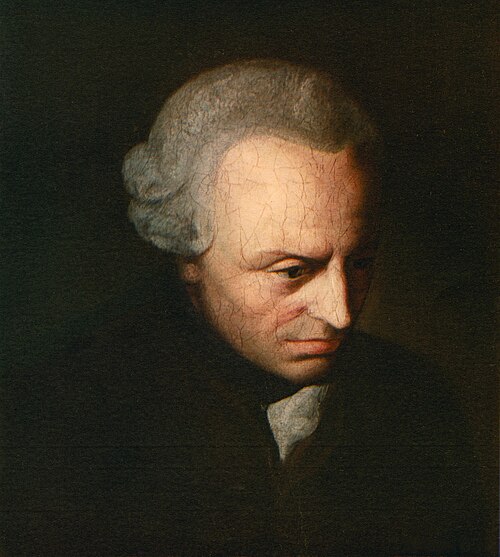
Kant can establish boundaries, but even a Kantian framework leaves questions of application. Managers must determine when aggressive bargaining becomes exploitation, when incomplete disclosure becomes deception, when loyalty becomes favoritism, when discipline becomes cruelty, when accommodation becomes irresponsibility, and when concern for a community becomes an unauthorized diversion of corporate resources. These are questions about particulars, proportion, and judgment.
Aristotle therefore transforms the underlying theory of management. Managerial excellence cannot consist merely in maximizing the correct objective while remaining inside externally imposed boundaries. Excellence also requires becoming the kind of person capable of perceiving and acting well when boundaries and objectives underdetermine the answer.
What is phronetic fiduciary theory?
Phronetic fiduciary theory holds that managers should pursue the legitimate purposes for which corporate authority has been entrusted to them, remain constrained by moral duties toward all persons affected by their conduct, and use practical wisdom where general principles do not determine a unique action.
This has consequences for corporate governance. Governance systems should still align incentives, monitor performance, establish rules, and impose accountability, but they should also select and cultivate people capable of sound judgment. A corporation that creates excellent incentive structures while elevating dishonest, vain, intemperate, or cowardly managers may remain badly governed.
The Aristotelian insight is consequently institutional as well as personal. Corporate cultures habituate people into characteristic patterns of perception and action, and organizations can cultivate virtue or vice. A company that repeatedly rewards exploitation will shape managers differently from one that rewards honesty, justice, courage, and measured judgment.
XIV. Corporate purpose without shareholder or stakeholder maximization
Phronetic fiduciary theory also permits a more plausible account of corporate purpose. A commercial corporation exists to conduct productive activity, create goods or services, sustain itself economically, honor the purposes for which resources have been entrusted, and participate in systems of social cooperation. Profit is essential to the ordinary commercial enterprise, but it need not be treated as the sole constitutive good of corporate activity.
This position differs from stakeholder welfare maximization as much as it differs from strict shareholder wealth maximization. The corporation does not exist to maximize every legitimate interest touched by its activities. It exists to perform its particular productive activity well, sustainably, and justly.
The Aristotelian language of excellence is useful here. A corporation can be highly profitable yet perform commerce badly if it relies on deception, recklessness, or systematic exploitation, just as a corporation can be morally earnest yet fail as a commercial institution if it cannot sustain its economic activity. Corporate excellence therefore includes both economic competence and moral quality.
This understanding also clarifies corporate social responsibility. Some socially beneficial expenditures are ordinary business decisions because they advance legitimate corporate purposes, while others are morally required because avoiding them would involve wrongdoing. Still others may be legitimate exercises of managerial discretion, while some remain improper attempts to use corporate resources for executives’ independently chosen political or social ends.
The relevant questions are therefore more discriminating than whether an action is profitable or socially beneficial. Managers must ask whether the action belongs to the legitimate purposes of the enterprise, whether morality requires or prohibits it, whether the use of corporate resources falls within authorized discretion, and what practical wisdom demands in the circumstances. That structure avoids both the Friedmanian temptation to reduce morality to legality and the stakeholder temptation to transform managers into general custodians of social welfare.
XV. Conclusion
Shareholder theory is strongest when it recognizes the moral significance of entrusted authority. Managers do not possess an unlimited right to use corporate resources for whatever ends they believe socially desirable, because doing so can disregard the agency of those who entrusted them with power. Friedman’s central insight about managerial authority should therefore be preserved rather than dismissed.
Stakeholder theory is strongest when it recognizes that corporate activity occurs among persons whose moral standing does not depend upon their ownership of stock. Employees, customers, suppliers, investors, creditors, and others remain persons to whom duties may be owed even when violating those duties would increase profit and remain technically lawful. The existence of these duties does not require a general stakeholder-maximization theory.
Kant reveals the symmetry connecting these insights. The manager may not treat shareholders merely as instruments of social policy, but neither may the manager treat workers, customers, suppliers, or others merely as instruments of shareholder enrichment. Fiduciary responsibility is therefore genuine, but morally bounded.
Aristotle then explains how managers can act responsibly once the inadequacy of both simple maximization rules becomes apparent. General principles inevitably underdetermine some particular cases, and good management therefore requires phronēsis: experienced, virtuous, reasoned judgment capable of perceiving what matters and responding proportionately. Character is not an optional ornament to managerial competence because character shapes the very perception through which rules and purposes are applied.
The phronetic fiduciary theory can consequently be summarized in three propositions. Managers must faithfully pursue the legitimate purposes of the authority entrusted to them, they must do so within moral constraints arising from the equal status of persons as ends, and they must exercise practical wisdom wherever role and principle do not uniquely determine action. These propositions form a theory of managerial responsibility rather than a theory about which constituency managers should maximize.
The deepest error in the traditional shareholder–stakeholder debate may therefore be its choice of question. The central problem is not whether shareholders or stakeholders should win a contest for managerial attention. The central problem is what sort of moral agent a manager must be when exercising entrusted power over an institution that affects the lives of other persons.
The resulting ideal is more demanding than either familiar alternative. A good manager is neither a technician maximizing a financial variable nor a philosopher-king empowered to spend corporate resources in pursuit of a private vision of social justice. A good manager is a faithful fiduciary, a morally constrained agent, and a practically wise person capable of judging well when rules and metrics no longer decide the case.
No governance system can eliminate that final requirement. Law can set boundaries, contracts can allocate authority, markets can discipline performance, boards can monitor managers, and incentives can shape behavior, but none can anticipate every circumstance in which a human being must decide what ought to be done. When those mechanisms run out, the decisive managerial question is not merely whose interests are represented, but what kind of person has been entrusted with the power to decide.
What is the difference between shareholder and stakeholder theory?
Shareholder theory emphasizes managers’ responsibilities to the owners and purposes of the corporation, while stakeholder theory emphasizes obligations toward a broader group of people affected by corporate decisions.
What is the main criticism of Milton Friedman’s shareholder theory?
A major criticism is that legal compliance and shareholder profitability may not exhaust a manager’s moral duties. Conduct can be profitable and lawful while still being deceptive, exploitative, unjust, or otherwise morally objectionable.
Can Kantian ethics support shareholder theory?
Partly. Kantian respect for rational agency can support the claim that managers should not use shareholders’ entrusted resources for unauthorized ends. The same principle, however, also prevents managers from treating employees, customers, and others merely as means to shareholder profit.
How does Aristotle improve theories of corporate responsibility?
Aristotle’s concept of practical wisdom explains how managers can make responsible decisions when fiduciary purposes and general moral rules do not fully determine what should be done in a particular case.
Is phronetic fiduciary theory a stakeholder theory?
No. It recognizes moral duties toward stakeholders without claiming that managers have a general mandate to maximize or balance stakeholder welfare.